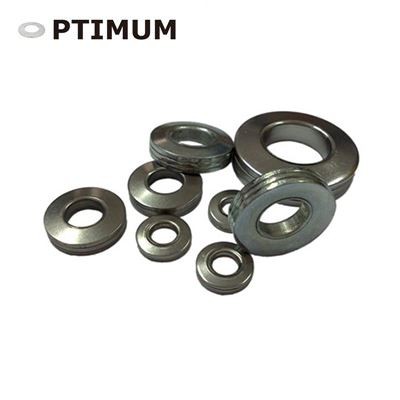
If you’ve ever worked with disc springs (those little cone-shaped workhorses we officially call DIN2093/EN16983), you probably know they’re built for heavy loads, tight spaces, and super demanding applications. We supply these things—our team works with them every single day, and one question that pops up all the time is: does humidity actually mess with their performance? It’s not the first thing most people think about when ordering disc springs, but after years of troubleshooting, testing, and field calls, we can say it’s way more impactful than you’d guess. Disc Spring DIN2093/EN16983

First, let’s keep this real: humidity isn’t just “moisture in the air”—it’s relative humidity (RH), right? That’s the amount of water vapor in the air compared to how much it can hold at a given temperature, and it swings super hard depending on where you’re using these springs. If you’re sticking them in a HVAC server closet where it’s locked at 40% RH year-round, that’s way different than if you’re shipping them to a coastal shipyard where summer RH hits 80%, or a desert mine where it bounces between 10% and 70% every day. DIN2093 and EN16983 set super strict specs for these springs—they’re made from high-quality spring steel, usually 51CrV4 or similar, heat-treated to get that perfect balance of stiffness and fatigue life. Humidity doesn’t attack the steel directly in a big, obvious way, but it kicks off a chain of small, sneaky issues that build up over time.
Let’s start with surface corrosion, because that’s the most immediate and visible issue. Wait, not all corrosion is the same. If a disc spring sits in low humidity (say, under 30% RH) for months, even years, the steel is fine. No visible rust, no material breakage. But crank that RH up to 60% or higher, and you get what’s called “atmospheric corrosion”—it’s not the thick, flaky rust you see on a garden tool, but tiny, almost invisible micro-pits on the cone’s surface. Those pits start super small, like a few nanometers wide, but when the spring cycles—compressing and expanding over and over, which is what disc springs do best—those pits act like stress raisers. A little stress on a smooth surface is manageable, but add a tiny pit, and that stress gets concentrated, leading to micro-cracks that spread. We once had a customer who ordered a batch of disc springs for a wind turbine pitch control system—they stored the extra units outside for three months waiting for installation, and when they finally put them in, half failed within 10,000 cycles. When we pulled the failed springs apart, we saw those tiny micro-pits all over the contact surfaces. That’s humidity doing its dirty work.
But wait, it’s not just uncoated springs, right? Most of the disc springs we supply are coated—usually with zinc, black oxide, or even zinc-nickel for extra durability. Coated springs are supposed to resist corrosion, but humidity still gets to them if the coating has any tiny defects (and let’s be real, even the best coating has micro-pinholes from manufacturing). High humidity will creep through those pinholes, get between the coating and the steel base, and cause what’s called “underfilm corrosion.” The coating bulges a little, loses its adhesion to the steel, and then when the spring compresses, the bulged areas add extra friction between adjacent discs (if you’re stacking them in series or parallel) or between the spring and the part it’s pressing against. Friction is a big deal for disc spring performance. DIN2093 and EN16983 calculate performance based on ideal friction, so if you add extra friction from corroded coatings, the spring doesn’t compress as far, doesn’t deliver the load you specified, and can even overheat in high-cycle applications because all that friction turns into heat. We had another customer in the agriculture industry who used zinc-plated disc springs in a tractor’s hitch system. They operated in the Midwest’s humid summer, and the friction from underfilm corrosion made the load drop by 12%—not enough to mess up the hitch at first, but after six months, it was causing uneven tire wear and required constant adjustments. That’s not the performance anyone signed up for.
Now, what about low humidity? It’s not all coastal shipyards—some applications are super dry, like semiconductor manufacturing cleanrooms or arctic oil rigs. People often think low humidity is totally fine, but we’ve seen cases where it causes a different problem: hydrogen embrittlement. Wait, how does humidity tie into that? Let’s break it down. When steel is exposed to high humidity over long periods, the moisture reacts with residual stresses in the steel (stresses from forming the disc shape, heat treatment, or machining) to produce hydrogen. That hydrogen atoms are tiny—super tiny, small enough to seep into the steel’s crystal structure. Now, disc springs are loaded with residual stress, right? They’re bent into that cone shape, so there’s internal stress already. Add hydrogen to that mix, and you get hydrogen embrittlement: the steel becomes way more brittle, and it can fail suddenly, without warning, even at loads way lower than the spring is rated for. We tested a batch of uncoated DIN2093 disc springs in a controlled environment: 10% RH, -20°C, and after 18 months of exposure, 3 of the 20 springs we tested cracked during a routine load test. That’s a big red flag for anyone using these springs in dry, cold places—humidity, even low levels over time, is enough to cause that issue.
Wait, let’s talk about actual performance metrics, not just failures. DIN2093 and EN16983 have standardized test methods for load-deflection, fatigue life, and stiffness. When we test our disc springs in our in-house lab at 40% RH (the standard test condition for these specs), we get consistent results: load within ±2% of the rated value, fatigue life over 1 million cycles for standard springs. But when we bump RH up to 75%—a common level in tropical climates—our tests show load can drop by 5-8% after 500,000 cycles. That’s a huge difference. A customer using these springs in a valve assembly where they need precise load control—say, a pressure relief valve that has to open at exactly 10 bar—this 5% drop means the valve starts opening early, leading to leaks, pressure loss, or even system damage. What about stiffness? Stiffness is how much load you need to deflect the spring a certain amount. We found that in high humidity, corroded micro-pits on the working surfaces make the spring slightly less stiff—again, not a big change at first, but over time, as corrosion gets worse, stiffness can drop by 10% or more. That’s enough to throw off the entire design of a system, which is why engineers have to factor in humidity when specifying disc springs, not just load ratings.
But here’s the good news: it’s not all doom and gloom. Humidity’s effect is totally manageable if you know what to look for, and that’s where our team comes in, since we’ve been supplying DIN2093/EN16983 disc springs for industrial, automotive, aerospace, and energy applications for years. First, choosing the right coating. If you’re working in high humidity environments, we recommend zinc-nickel coatings instead of plain zinc or black oxide. Zinc-nickel has a much tighter, more durable coating that resists underfilm corrosion way better—our tests show it reduces corrosion rate by 70% compared to standard zinc in 75% RH over a year. For very high-cycle applications where fatigue is a concern, we also offer passivation treatments that help prevent hydrogen uptake, which is perfect for dry, low-humidity environments. Another trick is proper storage: most people just leave disc springs in cardboard boxes, but cardboard absorbs moisture. We supply our springs in sealed, desiccant-packed plastic bags for orders going to high or low humidity environments, and we include a little desiccant packet that keeps RH inside the bag at under 10%, which prevents both corrosion and hydrogen embrittlement during shipping and storage.
Wait, let’s address a common myth we hear all the time: “If I coat my disc springs, humidity doesn’t matter.” That’s not true. We recently had a customer who ordered a batch of zinc-nickel coated disc springs for a coastal wind farm. They stored them on-site in an unheated shed for six months before installing them, and even with the coating, the RH in the shed hit 85% during monsoon season, and a few of the springs developed tiny underfilm blisters. Luckily, we caught it before they were installed, because even though the coating protected against general corrosion, the prolonged high humidity caused the adhesion to break down. So even coated springs need to be stored properly, and for long-term outdoor use, we can add a layer of dry film lubricant that adds an extra barrier against moisture, while also reducing friction between stacked springs, which actually improves performance in all conditions.
Now, let’s talk about real-world examples, because that’s what matters most. A few years back, we had a customer in Brazil who used our EN16983 disc springs in a heavy-duty mining truck’s brake system. The mine is in the Amazon rainforest, where RH is consistently 80-85% year-round, and temperatures are high. Initially, they were using uncoated springs, and they were failing every 6 months due to corrosion and load loss. They switched to our zinc-nickel coated springs with the desiccant shipping, and now those same springs last over 2 years, even in that brutal humidity. Another customer in Siberia uses our DIN2093 disc springs in oil rig safety valves, where winter temps drop to -40°C and RH is under 15%. They used to get sudden spring failures from hydrogen embrittlement, but we switched them to our hydrogen-passivated, low-temperature compatible springs, and since then, they haven’t had a single failure in over 3 years. These aren’t test lab tricks—these are solutions that work for actual, working parts in real places.
So what should you take away from all this? Humidity doesn’t just affect disc spring performance—it changes how they handle load, how long they last, and even whether they fail suddenly or slowly. For DIN2093/EN16983 disc springs, the sweet spot for reliable performance is around 35-45% RH, where corrosion and hydrogen embrittlement are minimal, and friction stays at the designed level. If your application is outside that range—super humid, super dry, extreme temps—you need to adjust the spring type, coating, or storage to compensate.
If you’re working with disc springs and you’re not sure how humidity is affecting your system, or you’re tired of dealing with premature failures or inconsistent performance, reach out. Our team knows these springs inside and out, we’ve tested hundreds of batches in all kinds of humidity conditions, and we can help you pick the right spring for your specific environment. No one wants to deal with a system failing because a tiny, overlooked factor like humidity messed up the parts. Let’s chat, and we’ll make sure your DIN2093/EN16983 disc springs perform exactly as you need them to, no matter what humidity level you’re working in.
NFE25511 French Serrated Spring Washers References:
- DIN Deutsches Institut für Normung. DIN2093: Disc Springs – Dimensions, Loads, Deflections. 2017
- European Committee for Standardization. EN16983: Disc Springs for Technical Applications – Requirements and Testing. 2020
- ASM International. Corrosion of Steel in Atmospheric Environments. 2019
- NACE International. Hydrogen Embrittlement in High-Strength Steels: Causes and Mitigation. 2021
- Our In-House Lab Test Reports: Humidity Effects on DIN2093/EN16983 Disc Spring Performance, 2018-2024
Yangzhou Optimum Spring Manufacturing Co., Ltd.
As one of the most professional disc spring din2093/en16983 manufacturers and suppliers in China, we’re featured by quality products and good service. Please rest assured to buy customized disc spring din2093/en16983 made in China here from our factory. For more information, contact us now.
Address: No.9 West of Shuangtang Rd, Yangzhou, P.R. China 225000
E-mail: susie@optimum-spring.com
WebSite: https://www.optimum-spring.com/
