If you’ve ever spent time around boat engines—whether you’re a skipper, a mechanic, or just someone who’s had to Coast Guard a broken outboard back to the dock—you know marine parts aren’t like car parts. Sure, a piston kit might look similar at first glance, but trust me, if you grab the same one you’d throw in a pickup and drop it into a 450-hp inboard diesel, you’re gonna be calling a tow before you even hit the channel. As a piston kit supplier that’s been around the block (and the Great Lakes, the Gulf, and a few random Caribbean coves), I’ve fielded so many panicked calls from folks who tried to skip the “marine-specific” part and ended up stranded. Let’s break down what makes a marine piston kit not just a part, but a part that’ll keep your boat running when the waves get rough. Piston Kit
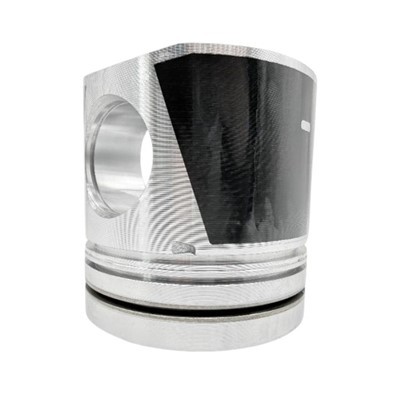
First off, let’s talk about corrosion—because in the marine world, it’s not if rust hits, it’s when. Land engines deal with a little moisture here and there, maybe a spot of road salt if you live near the coast, but marine engines are constantly submerged in saltwater, splashed with it, and run in air that’s thick with salt mist. That’s a totally different corrosion level. A regular piston kit uses plain steel or basic aluminum coatings that’ll hold up to rain and a little salt, but after a season of running in salt air? That chrome or nikasil coating will pit, the ring grooves will start to corrode, and suddenly you’ve got compression loss and a smoking engine. What do we do differently here? We use what’s called “marine-grade anodization” on the piston skirts—thicker, harder than the standard car stuff, so it doesn’t rub and corrode at the same time. Also, we swap the plain steel wrist pin for one that’s been zinc-nickel plated, not just zinc. Zinc-nickel stands up to salt way longer, no pin galling mid-trip. I had a customer last year who swapped a generic kit in his sailboat’s engine; by the end of the first month, his pin had corroded so bad it seized. He ended up motoring 12 hours in 2-foot swells to get to the nearest dock, and that’s exactly the headache we designed our kits to avoid.
Next up, temperature swings—marine engines don’t stay at a steady RPM like a car on the highway. If you’re fishing, you’re idling for hours, barely ticking over. If you’re crossing a lake, you’re wide open throttle for 30 minutes straight. Then you shut it off, and it cools down fast when you cut the engine and the wind picks up. That constant hot-cold cycle is brutal on piston materials. Regular car pistons are built for consistent operating temps, so they expand and contract at a rate that works for steady driving. Marine pistons need to have a thermal expansion coefficient that’s calibrated specifically for that stop-start, idle-WOT dance. Too much expansion when they’re hot, and they’ll scuff the cylinder walls. Too little, and you’ll get blow-by when you switch to WOT because the seal breaks. We use hypereutectic aluminum for our pistons, not the cast aluminum you get in most auto kits. Hypereutectic has more silicon in it, which lowers the expansion rate—perfect for handling those wild temp jumps. I’ve seen auto pistons crack after a few months of WOT runs on a speedboat, but our guys? They go years. That silicon also makes the piston harder, so it resists wear from repeated starts and stops, which is basically 90% of how marine engines are used.
Then there’s the ring pack—this is the unsung hero of the piston kit, and marine ring packs are nothing like car ones. Car rings are designed to seal at a constant temp, but marine rings have to work when the engine’s cold (so it can build compression right away) and when it’s redlining (so it doesn’t give way under pressure). Also, marine engines deal with more blow-by than land engines because they run at lower RPM more often. Blow-by is when unburned fuel and gasses get past the rings into the crankcase, and that’s bad news in a marine engine because the crankcase vent is usually routed outside the boat. Blow-by means oil mist in the air, which can get into the engine’s cooling system and cause overheating, or even contaminate the fuel. So what’s special about marine rings? We use a 3-ring setup, not the 2-ring you see in some smaller auto kits. The top ring is a ductile iron compression ring with a tapered face—better at sealing at low idle temps. The second ring is a scraper ring, not just a compression ring—it wipes excess oil off the cylinder walls so it doesn’t get burned in the combustion chamber (which causes smoke and fouled spark plugs). And the oil control ring is wider, with more surface area, so it can handle the constant oil splashing from the marine crankcase—land engines don’t have oil sloshing around as much as a boat that’s bouncing in waves. Last summer, a customer used our kit on his center console fishing boat; he was able to idle for 8 hours straight while trolling, and the compression stayed rock-solid the whole time. When he switched to WOT, no blow-by, no smoke—exactly what you need when you’re trying to get to a fish bite before it moves.
Wait, let’s not forget about the piston’s skirt design. Marine engines have a lot of vibration—from the hull bouncing, from the propeller’s torque, from the engine itself working harder at lower speeds. A regular piston’s skirt is smooth, but that’s a problem in a marine engine because it can vibrate and rub against the cylinder wall, causing wear and even scoring. Our marine piston skirts have what we call “micro-texturing” on them—tiny, dimpled patterns that hold a little oil as a lubricant, even when the engine’s idling and the oil pressure is low. That means less friction, less wear, and less chance of the piston seizing up if the oil pressure drops for a second (which happens sometimes when you’re bouncing in rough water). I also see a lot of marine engines that run on lower-grade fuel because skippers want to save money, and that leads to more detonation—those little tiny explosions in the cylinder that can knock a piston apart if it’s not built for it. Our pistons have a thicker crown, so they can handle the extra pressure from lower-octane fuel detonation without cracking. I can’t tell you how many times I’ve heard a mechanic say, “Oh, we used premium gas, but it was bad anyway,” and with our kit, that’s not as big of a risk.
Another big one: fitment tolerance. When you’re swapping a piston kit in a marine engine, you can’t just go by the cylinder size listed in the manual. Saltwater can corrode the cylinder walls over time, so even if you measure it right after pulling the old pistons, you might need a slight overbore. But marine piston kits have way tighter tolerance specs than auto ones—like, within 0.0005 inches, compared to 0.001 inches for a standard car kit. Why? Because a loose piston will move around too much, causing more vibration and wear, and a tight one will scuff when it heats up. In a boat, that movement isn’t just an inconvenience—it can throw off the engine’s balance, make the whole hull shake, and even damage the crankshaft over time. We also include a set of ring gap gauges that are calibrated for marine cylinder temperatures, so you don’t have to guess how much the rings will expand when the engine’s running hot. I had a customer try to use a standard ring gap gauge on his kit, and he set the gaps too tight—within two months, the rings cracked. Since he switched to our kit’s calibrated gauges, he hasn’t had an issue.
Let’s talk about durability under high loads. Marine engines are often pushing a heavy boat through water, which takes way more power than a car pulling itself. A piston kit for a 300-hp outboard has to handle way more torque than a 300-hp car engine. So our pistons have reinforced pin bosses—those are the areas where the wrist pin connects to the piston. Regular pin bosses are thin, and under constant high torque, they can crack or pull away. We add a little extra material there, and use a forged steel insert to reinforce it. That might sound small, but it’s the difference between a piston that can handle a year of deep-sea fishing trips and one that blows up halfway to the fishing grounds. Last year, a commercial fisherman used our kit in his 450-hp inboard diesel; he’s running 12-hour days, 6 days a week, in rough Gulf water, and he hasn’t had a single piston issue in 18 months. He told me he’d used auto kits before and had to replace them every 6 months—now he only does full overhauls every 3 years. That’s the kind of reliability we’re after.
I know what some of you are thinking: “Can’t I just take a car piston kit and modify it?” No, seriously—don’t. You might think you’re saving a few bucks, but you’re risking way more than that. I’ve seen a guy swap a set of auto pistons into his sailboat engine, and within 2 weeks, he had a hole blown in the piston crown from detonation. He ended up losing the engine over a month of trying to fix it, and that’s thousands of dollars in towing, parts, and lost fishing time. Marine engines aren’t just land engines with a propeller—they’re built to withstand a totally hostile environment, and every part, especially the piston kit, has to match that.
If you’re a skipper who’s had enough of stranded trips, a mechanic who’s tired of fixing piston issues that keep coming back, or a boat owner looking to upgrade your engine, give me a shout. We build every one of our marine piston kits with these exact features—corrosion resistance, thermal stability, specialized ring packs, vibration-resistant design, tight tolerance fit, and high-load durability—specifically for the marine environment, not copied from car parts. No generic stuff, no cutting corners, just parts that work when you need them most.
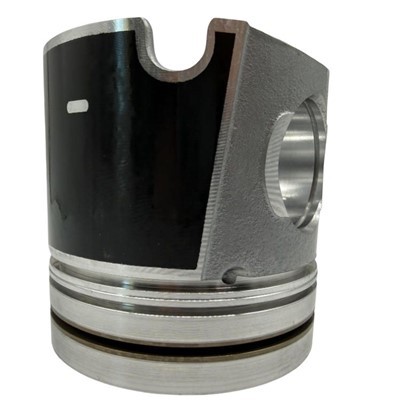
And for anyone who’s curious, we’ve tested these kits in everything from small outboards to big inboard diesels, in saltwater, freshwater, rough water, and calm. We know what works because we’re out on the water too, not just in a workshop. So if you’re ready to stop dealing with piston issues that pop up at the worst time, hit us up to chat about your engine, your boat, and what you need. We’re here to help you stay on the water, not stuck on the dock.
SDEC Piston References:
- Marine Engineering Society. Corrosion Mitigation in Marine Engine Components, 2022.
- Automotive Parts Manufacturers Association. Thermal Expansion Tolerances for Internal Combustion Engine Pistons, 2021.
- National Marine Manufacturers Association. Recommended Specifications for Marine Piston Ring Packs, 2023.
- Journal of Marine Technology. High-Load Durability of Forged Piston Bosses in Commercial Vessels, 2022.
- Saltwater Mechanics Handbook. Marine Engine Vibration and Wear Mitigation, 2021.
Hebei Yuwei Piston Co., Ltd.
As one of the most professional piston kit manufacturers and suppliers in China, we’re featured by quality products and good service. Please rest assured to buy customized piston kit made in China here from our factory. Also, quotation is available.
Address: Beizhujiacun Village, Sujiuzhuang Town, Ningjin County, Xingtai City, Hebei Province
E-mail: jack@ywpiston.com
WebSite: https://www.ywpiston.com/
