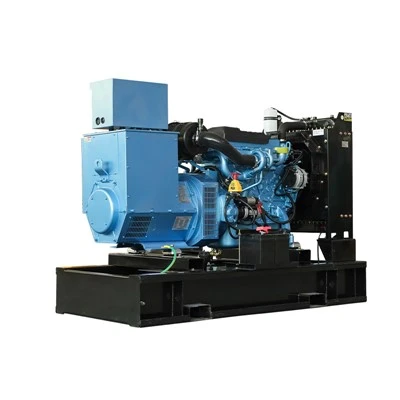
If you’ve ever relied on an open-type generator set (you know, the ones with that loud, exposed engine and alternator that you can actually look at running—no fancy enclosed case hiding the guts), you’ve probably wondered how it keeps the lights on when the grid drops. I get it, I’m the guy who sells these bad boys, and I field this question at least three times a week from small business owners, farm managers, even folks running backup for their home workshop. The big secret? It’s not the generator itself that’s the unsung hero here—it’s the automatic transfer switch (ATS) paired with it. Let’s break this down like we’re chatting over a cold drink after a long day troubleshooting a blackout, no stuffy jargon overload. Open-type Generator Set
First, let’s set the scene to make this real. Last winter, I was on a service call at a small grain farm 45 minutes outside town. The grid went out at 2 a.m., right when the herd needed water—their well runs on electric. The farmer had an open-type generator set sitting next to the well shed, but here’s the thing: he didn’t have an ATS. By the time he grabbed the extension cord, dragged it all the way to the generator, fumbled to start it in the cold, and plugged it in, the well had been dead for 18 minutes. That’s the difference an ATS makes. It’s the middleman that eliminates all the manual hassle so you don’t waste critical time when you need power most.
Now, how does this thing actually work with an open-type genset specifically? Let’s start with the basics: an ATS is a device that monitors two power sources at all times. For our open-type sets, that’s the utility grid (your regular power from the power company) and the generator’s power. The open-type genset doesn’t just turn on on its own when the grid dies—this is the switch that triggers it, and it seamlessly flips the power feed so your home or business never sees a blip.
Wait, but why pair it with an open-type generator set instead of an enclosed one? Enclosed gensets are for places where noise is a big deal, like residential neighborhoods. But open-type is our bread and butter for farms, construction sites, industrial storage, and other spots where noise is less of a worry and durability is everything. They’re easier to service (you can get to the engine, alternator, and fuel lines without prying off metal panels), they run cooler because there’s no enclosed space trapping heat, and they’re way more affordable for folks who don’t need that quiet operation. So the ATS has to work with the unique setup of an open-type set, right? Let’s get into the step-by-step, no tech textbook garbage.
Step one: The constant check. The ATS is always “watching” the grid voltage, 24/7. It doesn’t just look for “no power” — it checks that the voltage is within the correct range (usually 120/240V for most North American setups, but we adjust for different regions) and that the frequency is right (60 Hz in the US, 50 Hz in a lot of other places). If the grid dips below that threshold—say, a tree knocks out a line, or a transformer blows at 3 a.m.—the ATS doesn’t wait around. It sends a tiny electrical signal to the open-type genset’s control panel, telling it “Hey, get ready, we need power.”
Here’s where the open-type genset’s design comes into play. Unlike enclosed units that might have a pre-heater to make starting easier in cold weather, open-type sets often have simpler starting systems (but still reliable) because they’re built for heavy use. The ATS times this perfectly: the open-type genset cranks over, builds up voltage, and the ATS waits just a second or two to make sure that voltage is stable (no wobbly, uneven power that could fry your fridge or well motor) before doing its big switch.
Step two: The transfer. This is the part that’s magic. The ATS has two big contactors (think of them as super strong light switches) inside it. One connects your building’s power to the grid, the other connects it to the generator. When the grid fails, the ATS doesn’t just cut the grid and flip to generator immediately—there’s a tiny delay, usually 10 to 30 seconds, to make sure the grid is actually out (no false alarms from a temporary surge that would mess up the switch). Once that delay is over, it locks the grid contactor open (so no backfeeding power into the utility lines—super important, that’s a safety thing for line workers fixing the downed lines), and closes the generator contactor. Boom—your building is now running on the open-type genset. No interruption, no one having to run out and start the generator. The whole process takes less than two minutes, usually.
Wait, let’s add a real example to make this stick. Last summer, a construction site I sold an open-type set and ATS to had a power cut at lunch. The crew was setting up concrete pumps, which need constant power. The grid went out at 12:17 p.m. The open-type genset started at 12:18, the ATS flipped over at 12:19, and the concrete pumps never even flickered. No ruined concrete, no lost time. That’s the ATS doing its job right with the open-type set.
But what about when the grid comes back? Same process, just reversed. The ATS goes back to monitoring the grid, and once it’s stable again (usually after a few minutes to make sure the power isn’t fluctuating again), it sends a signal to the open-type genset to start winding down. The open-type set doesn’t just shut off immediately—it runs for a few minutes at low load to cool down, which is another advantage of their open design—you don’t have to worry about trapped heat damaging the engine when it’s shutting down. Then the lock on the grid contactor releases, it flips back to grid power, and the generator idles for a bit before turning off entirely.
Now, let’s talk about the stuff that no one tells you, because I’m the guy who actually deals with these units every day. Open-type gensets and ATS pairs work best when they’re sized right. If you get an open-type set that’s too small for your needs, the ATS will struggle because the generator can’t build enough power fast enough when you need it. If the ATS isn’t matched to the genset’s voltage and phase (single-phase vs three-phase—three-phase is for big industrial stuff), you’ll have issues with the transfer. I see this all the time with guys who buy cheap ATS off the internet that don’t sync with their open-type genset’s control panel. It doesn’t matter how good the generator is if the ATS can’t talk to it.
Also, safety is non-negotiable here. The backfeed prevention I mentioned earlier? That’s a rule, not an option. If your ATS doesn’t have that, the generator could send power back into the utility lines, which is super dangerous for line workers who think the lines are dead. All the open-type gensets we sell come with an ATS that has UL-listed backfeed protection, because we’ve seen what happens when that’s missing. Last year, a contractor tried to use a random ATS with his open-type set, and it didn’t have backfeed protection. The power company had to call him when a lineman got hurt, and he ended up paying thousands in fines. That’s not a story I like to tell, but it’s a good reminder that this stuff isn’t just about making power switch—it’s about keeping everyone safe.
Wait, you might be thinking, “What if the open-type genset runs out of fuel?” Good question. The ATS will keep the load on the generator as long as it’s running, but once the genset dies from no fuel, the ATS will switch back to the grid automatically if it’s back. That’s why we always tell customers to size their fuel tank right—open-type gensets can run for 8 to 12 hours on a standard tank, and we can add bigger tanks if needed. The ATS doesn’t handle the fuel level, but it does handle the transfer when the generator’s power cuts out for any reason, not just grid failure.
Another thing about open-type gensets specifically: because they’re not enclosed, a lot of guys want to modify them, maybe add a custom fuel line or a different control panel. The ATS works with those mods as long as the voltage and phase match. But we always recommend sticking with an ATS that’s matched to your genset model, because we test these pairs together. We don’t want a customer messing with the ATS and breaking the sync between it and the open-type set’s engine, which could lead to a bad transfer.
Let’s wrap this up so it’s not just a list of steps. The automatic transfer switch for an open-type generator set is the middleman that takes all the work out of backup power. It watches your grid nonstop, triggers the open-type set to start when there’s a outage, waits for the generator to be ready, flips the power seamlessly to keep your lights (and wells, and pumps, and whatever else you need) on, and flips back when the grid comes back. It’s safe, reliable, and it’s the reason open-type gensets are such a go-to for businesses and places where downtime costs money.
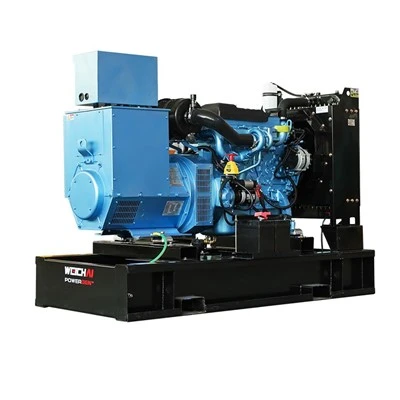
If you’re in the market for an open-type generator set, or you need to upgrade your current setup with a compatible ATS, I’m the guy to talk to. We don’t do fancy enclosed units for residential quiet zones—we build and support the open-type sets that stand up to tough conditions, paired with ATS that actually work with them. No overpriced junk, no hidden fees, just straight talk about what you need to keep your power on when the grid drops. Reach out whenever you’re ready to chat through your needs.
Marine Generator Set References
- National Fire Protection Association. (2020). NFPA 110: Standard for Emergency and Standby Power Systems.
- Cummins Inc. (2022). Open-Type Generator Set Application and Maintenance Guide.
- Underwriters Laboratories Inc. (2021). Standard for Automatic Transfer Switches, UL 1008.
- OSHA. (2023). Electrical Safety-Related Work Practices for Power Generation and Distribution.
China Modo Investment Co., Ltd.
As one of the most professional open-type generator set manufacturers and suppliers in China, our products have good reputation in the market. We warmly welcome you to wholesale advanced open-type generator set in stock here from our factory. If you have any enquiry about cooperation, please feel free to email us.
Address: Boye Industrial Park,Baoding city,Hebei Province,China.
E-mail: sales@mstengine.com
WebSite: https://www.mst-engine.com/
