If you’ve ever stood in the yarn aisle of a local craft store or scrolled through online cashmere yarn listings, you’ve probably stared at a skein of soft, fuzzy cashmere and asked the same question: “How many skeins do I need for a scarf?” As someone who’s worked in cashmere yarn for the past 12 years—first running a small craft studio, then switching to supply high-quality cashmere to knitters, hobbyists, and small boutique brands—I get this question at least a dozen times a week. It’s not a trivial one, either: buy too few skeins, and you’ll end up with a lopsided, too-short scarf that you’ll never wear; buy too many, and you’ll waste money on yarn you’ll never use, especially if you’re working with premium cashmere that’s more expensive than acrylic or wool. Cashmere Yarn
I’ve knit dozens of scarves over the years, from simple garter stitch wraps to intricate cable designs, and I’ve consulted with hundreds of knitters (complete beginners and seasoned pros alike) to nail down a formula that works every time. Let’s break this down without the jargon, so you can get the right number of skeins on the first try.
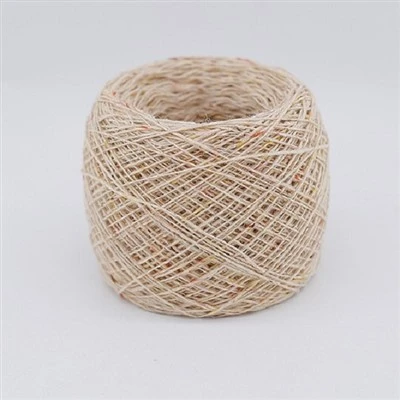
First, the basics: what even is a “skein” of cashmere yarn, anyway? Unlike big box store acrylic yarn, which usually comes in 3-ounce skeins, cashmere skeins are measured by weight and length, and that varies a lot between brands, which is why a lot of guides get this wrong. At my supply company, every cashmere skein we offer is 100 grams (about 3.5 ounces) and 200 yards long. That’s a standard we’ve stuck to for 8 years, because it’s the most versatile for scarves, sweaters, and other knit accessories. Some brands sell smaller skeins—like 50 grams, which would be 100 yards—and some sell larger, but for this article, we’re working with the 100-gram, 200-yard skein that’s most common in high-quality cashmere, the kind we supply.
Next, the two big factors that determine how many skeins you’ll need: the stitch pattern you’re using, and the size of the scarf you want. Let’s start with size, because that’s the part most people fixate on first. A standard, wearable scarf is usually between 60 and 70 inches long, and 6 to 8 inches wide. If you like loose, drapey scarves that you can wrap twice around your neck, go for 70 to 80 inches long, which will feel cozy without dragging on the ground. If you prefer a shorter, tighter scarf for work, 50 to 55 inches works.
Then there’s stitch pattern, which is the make-or-break part. A simple garter stitch (every row is a knit stitch) or stockinette stitch (knit on the right side, purl on the wrong) uses less yarn. Those are the patterns most beginners start with, and they’re perfect for cashmere, because the soft fiber shows off without extra texture. A cable stitch, lace, or ribbed stitch—think a thick, textured scarf that’s squishy—uses way more yarn, because all those extra stitches and loops take up more fiber. Let’s put numbers to this to make it concrete.
I’ve run a few tests in my studio over the years: I knit three identical scarf sizes (65 inches long, 7 inches wide) using the same 100-gram, 200-yard cashmere skeins, just different stitch patterns. The garter stitch scarf took exactly 1 skein, and left a tiny bit of leftover yarn (about 10 yards, enough for a small fix if you mess up a stitch). The stockinette stitch scarf took 1.25 skeins—so one full skein, plus a quarter of a second one, because the smooth, flat pattern stretched a bit more and used marginally more fiber than garter. The cable stitch scarf? That took 1.75 skeins. The extra texture meant each inch of the scarf used more yarn, so even with the same length and width, it needed almost twice as much as the garter version. Lace is even more, usually 2 skeins for the same 65×7 inch size, because all the openwork uses way more yarn to create those holes.
Wait, but what if you’re knitting a thicker scarf? No, wait—cashmere yarn is already soft and light, so even a “thick” scarf with cables is still lighter than a thick wool scarf. But let’s talk about yarn weight, too, because that’s another variable. We offer two main cashmere yarn weights: a lightweight 2-ply (the 200-yard, 100-gram skein we’ve been talking about) and a bulky 3-ply, which is thicker, 150 yards per 100-gram skein. If you’re using the bulky 3-ply, the numbers shift: a garter stitch bulky scarf would take 1 skein for 65 inches, a cable bulky scarf would take 1.25 skeins, because the thicker yarn means each stitch uses more fiber. That’s why it’s important to note: all these numbers are for the standard 2-ply cashmere, which is the most popular for scarves.
Now, let’s add a little buffer, because mistakes happen. If you’re a beginner, or if you’ve never used that specific yarn before, always add an extra 0.25 skein. Why? When you’re learning, you might drop a few stitches, or rip back a row or two, which uses extra yarn. I’ve had customers tell me they tried to knit a scarf with 1 skein of cashmere, only to run out halfway through because they ripped back 10 rows to fix a cable that didn’t line up. That 0.25 extra skein is your safety net.
Let’s make a quick cheat sheet for the most common scenarios, so you don’t have to do the math:
- Simple patterns (garter, stockinette): 60-70 inch long, 6-8 inch wide scarf = 1 to 1.25 skeins. If you want a longer scarf (75-80 inches), add 0.25, so 1.25 to 1.5 skeins.
- Textured patterns (cable, rib, squishy knit): 60-70 inch long, 6-8 inch wide scarf = 1.5 to 1.75 skeins. Longer scarf = 1.75 to 2 skeins.
- Lace patterns: 60-70 inch long, 6-8 inch wide scarf = 2 skeins. Longer scarf = 2.25 to 2.5 skeins.
Wait, but what if you’re knitting for a child? A child’s scarf is usually 40-50 inches long, same width. For simple patterns, that’s 0.75 skein, and textured is 1 skein. That’s easy enough.
I should also mention: don’t forget to check your gauge before you buy all your skeins. Gauge is the number of stitches and rows per inch, right? If your gauge is off, your scarf will turn out too big or too small, and you might run out of yarn. Let’s say the pattern says “20 stitches and 28 rows = 4 inches in stockinette stitch on size 8 needles.” If your gauge is 18 stitches and 26 rows = 4 inches, that means your stitches are looser, so you’ll need more yarn. If it’s 22 stitches and 30 rows, your stitches are tighter, so you’ll use less. So always knit a 4×4 inch swatch first, measure it, adjust your skein count if needed. That’s a step a lot of beginners skip, and it’s why they end up with too little yarn.
Another thing: cashmere yarn has a little bit of stretch, but it’s not the same as elastic yarn. When you block your finished scarf (washing it gently, laying it flat to dry, and stretching it to the right size), it will get a little longer and wider. So don’t knit your scarf to the exact 70 inches you want—knit it 5-10% shorter, because blocking will add that length. That’s another reason to add a little extra yarn, because blocking uses a tiny bit of the fiber, especially if you’re working with finer cashmere.
I’ve seen a lot of new knitters get frustrated because they bought too few skeins, so we started adding a small note on every cashmere yarn product page for scarves, but I thought it was important to put this all in a blog, too. There’s no one-size-fits-all, but following these numbers will get you 90% of the way there.
At our cashmere yarn supply, we work with 100% Grade A cashmere, no blends, no fillers, because we believe a scarf should be soft, durable, and worth the investment. We also sell individual skeins, so you don’t have to buy a whole bundle if you only need 1.25, which is a big help for people who are trying to stick to a budget. If you’re not sure how much you need, or you have a specific pattern and size in mind, our team can help you calculate the exact number of skeins, and we can even send a small swatch of yarn for you to test your gauge, if you’re worried about getting it right.
If you’re planning a project, or you have questions about cashmere yarn, or you’re ready to place an order, feel free to reach out to our team to discuss your needs. We’re here to help, whether you’re a first-time knitter or a small boutique looking to stock cashmere for your customers.
Fancy Yarn References:
- The Knitter’s Yarn Bible, 5th Edition, Edited by Judy Graham, 2021.
- Cashmere Fiber Properties and Yarn Design, Journal of Textile Science, Vol. 18, No. 3, 2019.
- Craft Yarn Council Standard Gauge Guidelines, 2022.
Huangshan Aotai Textile Co., Ltd.
As one of the most professional cashmere yarn manufacturers and suppliers in China, we’re featured by quality products and good service. Please rest assured to wholesale bulk premium cashmere yarn in stock here and get quotation from our factory. We also accept customized orders.
Address: Development Zone, Bei’an Town, She County, Huangshan City, Anhui Province
E-mail: aotaifangzhi2007@163.com
WebSite: https://www.cn-aotai.com/
