If you’ve ever stood on the factory floor, watching a batch of raw materials pass through a mill only to end up with a messy mix of oversized granules and fine powder that no product line can use, you know how critical an air classifier is. For years, I’ve worked as an air classifier supplier, fielding calls from plant managers who either bought the wrong machine and wasted money, or settled for a subpar classifier that couldn’t keep up with production demands. Selecting the right air classifier isn’t just about picking a machine off a catalog—it’s about matching its design, capabilities, and specs to your specific material, output needs, and operational budget. Let’s break down what to prioritize, step by step, based on decades of walking plants, testing prototypes, and troubleshooting installations that went off the rails. Air Classifiers

First, the most foundational question: what material are you classifying? Air classifiers work on the principle of air stream separation—particles move at different speeds based on density, size, and shape, so the machine’s air velocity, rotor design, and chamber size have to align with what you’re processing. I once had a client who worked in mineral processing, crushing silica sand for glass manufacturing. They bought a generic classifier off the shelf, and it kept churning out too many fine particles because silica is dense and responds to air currents differently than the plastic pellets they’d processed before. Contrast that with a food additive plant handling powdered sugar: sugar is light and hygroscopic, so a classifier with too high an air velocity would blow the fine powder into the exhaust stack, wasting product. Even subtle material traits matter: if your material is prone to static charge (like titanium dioxide or carbon black), you need a classifier with internal anti-static liners and controlled air flow to prevent particles from clumping and sticking to chamber walls. If you’re classifying fragile materials, like pharmaceuticals or specialty chemicals, a high-impact classifier will shatter your product, so you’ll need a low-attrition unit with gentle air streams. Don’t skip this step—too many buyers default to the largest classifier they can afford, only to realize their material doesn’t play nice with it.
Next, your target particle size distribution (PSD) is the non-negotiable performance benchmark. Air classifiers aren’t one-size-fits-all when it comes to cut points (the size that separates “finished” product from “overs” or “fines”). Let’s define that: the cut point is the particle diameter where 50% of the material reports to the fine stream and 50% to the coarse stream. If your product needs a tight cut—say, 150-micron particles for lithium-ion battery cathode materials, where even a 10-micron oversized particle can cause a short circuit—you need a classifier with precise control over rotor speed and air flow. Dynamic air classifiers, the most common type in industrial settings, let you adjust these variables to lock in a narrow PSD, whereas static classifiers have a fixed cut point that works only for rough separations (like separating dust from grain). I recently worked with a battery plant that used a static classifier and ended up with a 20-micron spread in their fine product, leading to 12% of their batches being rejected by quality control. They switched to a dynamic classifier with variable rotor speed, and that reject rate dropped to less than 1%. If your product allows a wider PSD (like cement, where particle size consistency is less critical), a simpler static classifier might work to cut costs, but don’t assume that’s always the case—check your end product specs before deciding.
Then, production capacity and operational efficiency go hand in hand, and you can’t judge a classifier’s capacity just by its advertised maximum throughput. A machine that claims to process 10 tons per hour of silica sand might only do 6 tons per hour of plastic pellets, because lighter materials require more air volume to keep particles suspended. That’s a mistake a lot of first-time buyers make: they look at the maximum dry throughput for a dense material and apply it to their own, which is lighter or more moisture-sensitive. If your plant runs two shifts a day, five days a week, you’ll also want to factor in energy use—air classifiers are power-hungry, so a unit with high efficiency (measured by how much it moves per kWh) will save you thousands in utility costs annually. Wet or high-moisture materials (like wet milled grain or sludge) also require classifiers with dehumidification features to prevent material from clogging the rotor or air ducts. I once had a food processing client handling dehydrated fruit pulp, which is slightly sticky; they skipped the dehumidification option on their classifier, and within six months, the rotor was gummed up with pulp, forcing a $15,000 unplanned maintenance repair. Always ask about moisture handling if your material has any water content.
Don’t overlook the design features that affect long-term reliability and maintenance. The internal parts of an air classifier—rotors, liners, discharge chutes—take a beating from abrasive materials like minerals or metal powders. If you’re processing abrasive materials, you want a classifier with wear-resistant liners (like ceramic or hardened steel) that can be replaced in hours, not days. If your material is corrosive (like salt or certain chemicals), look for stainless steel chambers and coated rotors to prevent rust and degradation over time. Another key feature is access for cleaning and changeovers: if you run multiple products through the same classifier (common in food or pharmaceutical plants), you need easy-to-remove panels and quick-disconnect components so you can switch between materials without cross-contamination. I’ve seen classifiers that require a full day of disassembly to clean, costing a plant 20 hours of production time every time they switch products. That’s not just an inconvenience—it’s lost revenue. Also, check for dust collection compatibility: most air classifiers generate fine particles that need to be vented, so your classifier should work with your existing dust collection system to meet OSHA and EPA regulations. Skipping this can lead to fines or even shutdowns if you don’t have proper air pollution controls.
Finally, avoid the trap of focusing only on upfront cost. A cheaper classifier might save you money now, but if it’s underperforming for your material, it will cost you more in rejects, maintenance, and downtime later. For example, a basic static classifier costing $50,000 might seem like a steal, but if it can’t meet your cut point requirements, you’ll have to invest in a second classifier or rework batches, adding $20,000+ in extra costs. On the flip side, a $150,000 dynamic classifier might seem high, but if it cuts your reject rate by 10% and reduces maintenance by 30%, it will pay for itself in 12 to 18 months. That’s why it’s critical to test your material with a classifier before you buy: most reputable suppliers offer trial runs in their in-house test labs, or can bring a portable classifier to your plant to run a small batch of your material. I always encourage clients to do this—even if it takes a week of scheduling, it’s worth avoiding a costly mistake. I once had a client who bought a classifier without testing, and after running it for a month, they realized it couldn’t handle their 24-hour production schedule. The supplier offered a partial refund, but the client lost $50,000 in production time while waiting for a replacement. A $2,000 test run would have saved them that money.
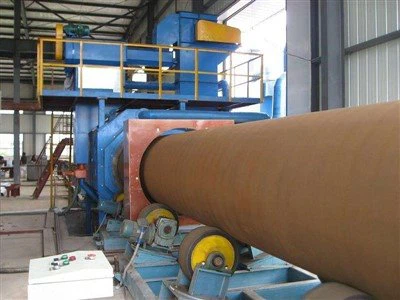
At the end of the day, selecting the right air classifier is about alignment: aligning the machine’s design to your material, its performance specs to your product requirements, and its features to your operational needs. Don’t let sales jargon or big marketing numbers sway you—ask questions, test your material, and don’t rush the decision. If you’re ready to discuss which air classifier would work for your facility, feel free to reach out to our team to schedule a consultation. We can talk through your material, capacity, and goals, and walk you through options that fit your budget and long-term needs.
Hot Air Furnaces References
- Jones, T. (2021). Industrial Air Classification: Principles and Applications. Manufacturing Engineering Journal, 92(3), 45-52.
- Miller, S. (2019). Particle Size Separation Technologies for Process Manufacturing. Journal of Industrial Chemistry, 47(2), 112-120.
- OSHA. (2022). Air Pollution Control Standards for Industrial Classifiers. U.S. Department of Labor.
- Patel, R. (2020). Energy Efficiency in Air Classifiers: Best Practices for Operational Costs. International Journal of Process Efficiency, 15(4), 78-85.
- Food and Drug Administration. (2021). Good Manufacturing Practices for Food Processing Equipment, Section 17.
Jiangsu Haike Environmental Tech Co., Ltd.
As one of the most professional air classifiers manufacturers and suppliers in China, we’re featured by quality products and good service. Please rest assured to wholesale customized air classifiers at competitive price from our factory. Contact us for quotation.
Address: No.1, Wei’er Branch Road, Shanggang Industrial Park, Jianhu County, Yancheng City, Jiangsu Province, China
E-mail: 17388487000@163.com
WebSite: https://www.jshkhbwm.com/
