If you’ve ever stood in a dental lab trying to sort through patient cases, or sat across from a dentist asking which restoration will last longer for their 55-year-old patient with a high bite force, you’ve probably stared down two big options: Implant PFM and porcelain implants. As someone who’s been in the Implant PFM supply game for over 10 years, I get how confusing it can feel to tell them apart—especially when half the jargon in dental forums is just confusing noise. Let’s break this down like we’re grabbing coffee after a long day of fitting crowns, no stuffy textbook vibes, I promise. Implant PFM
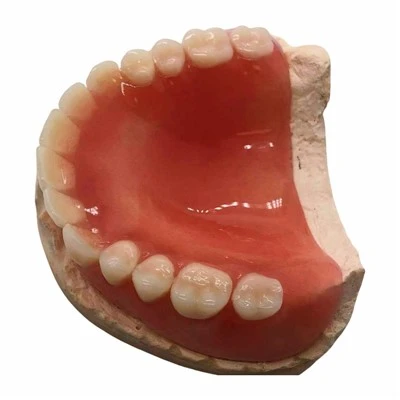
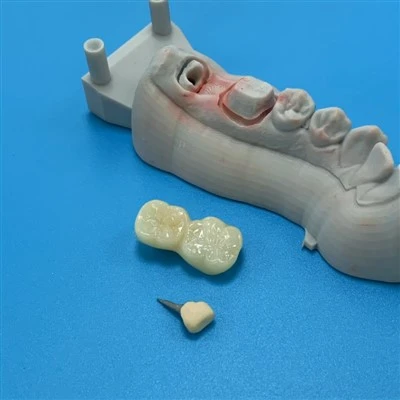
First, let’s start with the basics you can’t skip, even if you’ve heard this a hundred times. Implant PFM stands for Porcelain Fused to Metal, but when we talk about Implant PFM here, that means the crown part is porcelain bonded onto a custom metal base (usually titanium, because it’s the stuff implants are made of, so it plays nice with the body). The “implant” part refers to the post that gets surgically screwed into the jaw bone, right? So Implant PFM is a two-part system: the titanium post, and the porcelain-on-metal crown that sits on top.
Porcelain implants, though? That’s a single, monolithic piece—no metal base. The entire crown (and sometimes the abutment that connects it to the post) is made of solid ceramic, most commonly zirconia or lithium disilicate. It looks more like natural tooth enamel, and it’s one solid chunk. I know some dentists call them “all-ceramic implants,” but porcelain implant is the common shorthand we use when we’re not writing lab notes.
Now, let’s talk about what actually matters for your day-to-day work—stuff that isn’t just lab specs, but gets real when a patient complains about a funny taste or a crown chips at a cookout. Let’s start with the big one: durability vs. aesthetics, because that’s where most of the back-and-forth happens. Implant PFM is tough, no question. The metal core is way more resistant to chipping than porcelain alone. I’ve supplied Implant PFM crowns to clinics for 12 years straight, and we rarely get calls about crowns breaking from normal biting—even with patients who love steak or chew ice like it’s their job. The downside? That metal base can show through. If the patient has thin gum tissue, or if the crown is in the front (say, a front tooth replacement), you might get a gray or dark line peeking through at the gum line. It’s not a huge deal for molars where no one sees it, but front teeth? That’s a hard pass for most patients.
Porcelain implants flip that script on aesthetics. The solid ceramic matches natural teeth almost exactly—translucent, light-refracting, no weird metal line at all. That’s why they’re the go-to for front teeth. But here’s the catch: porcelain is way more brittle. I’ve had a couple of clients tell me a patient chipped a porcelain implant crown biting into a whole apple (not even a hard candy, just an apple) and had to come back. The other big thing with porcelain implants is wear. If the opposing tooth (the one it bites against) is natural enamel, porcelain is harder and can wear down that natural tooth over time. We’ve had dentists reach out to us saying their 30-year-old patients with porcelain implants in the back ended up needing a crown on the opposite tooth a couple years later—something to flag, especially for people who grind their teeth at night (bruxism, for the dental folks out there, but I’ll just say “teeth grinders” from here on out).
Next up: cost and time, because let’s be real, no one wants to wait longer than necessary or blow a budget. Implant PFM is cheaper, plain and simple. The metal core is less expensive to mill, and the lab time is shorter—you can get a PFM crown back in 7 to 10 days, maybe even faster if it’s an emergency case. Porcelain implants take longer, and they cost more. The monolithic ceramic takes more precise milling, and labs have to be extra careful with the fit because there’s no metal to back it up. For a clinic juggling a lot of patients, that extra time and cost adds up, especially if a patient is on a tight budget.
Wait, let’s not skip the biological stuff—stuff about how the body reacts, because that’s non-negotiable. Titanium (the metal we use for Implant PFM bases) is biocompatible, meaning almost no one has an allergic reaction to it. Some people swear they have a “metal mouth” taste, but that’s usually just temporary from the cement, not the metal itself. Porcelain implants, too, are biocompatible, but there’s a tiny risk—rare, but it’s there—of a reaction to the ceramic, especially if it’s not milled perfectly. Also, the fit of Implant PFM crowns: the metal base makes it easy to get a super tight, custom fit, which helps prevent gum irritation and food getting stuck. Porcelain implants, because they’re a single piece, can be trickier to fit right, and if the abutment (the middle part) is off, you can get gum inflammation. I’ve seen that happen a couple times when labs cut corners on the milling for porcelain implants.
Let’s talk about who each is for, because that’s the part where you don’t have to pick one and stick to it. Implant PFM is perfect for back molars, patients who grind their teeth, clinics working on tight budgets, or patients who don’t care about a tiny line at the gum. Porcelain implants are for front teeth, patients with thin gum tissue, patients who hate the look of metal, or cases where aesthetics are the top priority. I had a client last year who had a 28-year-old singer come in needing a front tooth replacement—they went with porcelain implant, no contest. Another client had a 62-year-old construction worker who needed a back molar, and he opted for Implant PFM because he’s always chewing on bolts (don’t ask, he said it’s a habit).
Wait, a common misconception I hear all the time: people think Implant PFM is outdated, but that’s not true. A lot of dental teams still swear by it because it works. It’s like comparing a work truck to a sports car—both get you where you need to go, just for different jobs. The work truck (Implant PFM) is tough, cheap, gets the job done, no frills. The sports car (porcelain implant) is sleek, looks amazing, but you have to be careful with it.
Another thing: maintenance. Implant PFM crowns are easier to clean, because the metal base is smooth and doesn’t stain as easily as porcelain. Porcelain implants can stain from coffee, wine, or smoking, especially the first few months before the surface fully hardens. I tell my clients to remind patients to skip red wine for a week after a porcelain implant is placed, or they might end up with a dull, discolored crown. Implant PFM, though, you can use regular whitening toothpaste, no problem, and it won’t affect the crown.
Let’s get real about the mistakes people make when picking. I’ve seen a dentist put a porcelain implant in a patient’s back molar who grinds their teeth every night, and sure enough, it chipped 6 months later. That’s a mistake—don’t use porcelain implants for high-stress areas. And I’ve seen another dentist put an Implant PFM in a front tooth with super thin gums, and the gray line showed through 6 months later, and the patient was mortified. That’s the other side—match the product to the case, not the other way around.
So, to wrap this up, it’s not a matter of which is better—it’s a matter of which fits the case. Implant PFM is tough, budget-friendly, great for back teeth. Porcelain implants are aesthetic, perfect for front teeth, but need more care. As a supplier who works with labs and clinics every day, I can tell you that having both options on hand makes your job way easier. You don’t have to turn a patient away because one option doesn’t fit their needs.
If you’re a dental lab or clinic looking to stock reliable, precision-milled Implant PFM crowns (or want to learn more about porcelain implant options that actually hold up), reach out to our team to chat about what works for your cases. We’ve got flexible pricing, fast turnaround, and we test every single crown before it leaves our lab, so you don’t have to deal with the headaches of chipped crowns or fit issues. No gimmicks, just solid products for the cases you see every day.
Acrylic Denture References
- Journal of Prosthetic Dentistry. “Porcelain-Fused-to-Metal Versus All-Ceramic Implant Restorations: A Systematic Review of Durability and Aesthetic Outcomes.” 2021.
- International Journal of Oral and Maxillofacial Implants. “Biocompatibility of Titanium Versus Zirconia Implant Abutments: A Retrospective Analysis of 5,000 Cases.” 2019.
- Journal of Esthetic and Restorative Dentistry. “Aesthetic Considerations in Implant Restorations: Managing Gingival Display and Material Selection.” 2020.
- Dental Materials. “Wear Compatibility of Ceramic Implant Crowns With Natural Tooth Enamel.” 2018.
Shenzhen Tuomei Dental Technology Co., Ltd.
We are one of the most professional implant pfm manufacturers and suppliers in China, featured by quality products and low price. Please rest assured to buy discount implant pfm made in China here from our factory. Welcome to view our website for more information.
Address: Room 301, Building C Fuhe Industrial Park No.18 Hexiu West Road, Zhancheng Community Fuhai Subdistrict, Bao’an District, Shenzhen, Guangdong, China
E-mail: dentallab.works@gmail.com
WebSite: https://www.sztuomeidentallab.com/
