If you’ve ever walked the floor at a wood processing trade show, or fielded panicked after-hours calls from a client whose chipper downed mid-shift, you’ve probably heard this question more than once: Do different wood chipper and pellet mill models require different spare parts? For 12 years, I’ve run a small, family-owned spare parts supplier focused exclusively on these two pieces of equipment, and I’ll tell you straight: the answer isn’t a simple “yes” or “no” — it’s messy, specific, and has made me (and more than a few of my customers) learn a hard lesson about rushing to buy generic parts. Wood Chipper and Pellet Mill Spare Part
Let me set the scene. Five years ago, a small sawmill in western Wisconsin called me in a sweat. Their heavy-duty drum chipper, a Model 668 from a now-defunct manufacturer, had sheared two chipper knives in a weekend of processing oak and maple. The operator had grabbed a set of generic replacement knives from a big-box industrial supply site, charged ahead, and within three hours, both knives snapped completely, leaving the chipper’s rotor wobbling so bad it tripped the breaker. By the time I showed up with the correct parts, they’d lost 18 hours of production, and a machinist at a local repair shop told me the generic knives had been slightly shorter than the original, throwing off the rotor’s balance and putting undue stress on the shear bolts. That was the first time I really dug into the nuances of model-specific parts, and it’s stuck with me ever since.
First, let’s break down why chipper parts can’t be one-size-fits-all. Wood chippers — whether drum, disk, or horizontal grinders — are engineered to handle specific wood densities, feed rates, and chip sizes. Take drum chippers, for example: their knives are mounted in recesses around a large rotating drum, and the spacing between the knives, their angle, and even the material they’re forged from are calibrated for each model’s intended use. A Model 415 disk chipper, designed for processing clean pallets and softwood, uses knives that are hardened to 55 HRC (Rockwell hardness), while a Model 920 heavy-duty drum chipper, built to churn through full hardwood logs and root balls, needs knives hardened to 58 HRC to resist impact. If you swap in the softer knives meant for the 415 on the 920, they’ll dull in days, not months, and the extra force from hitting dense wood will snap them.
Then there’s the shear bolts — those small, seemingly trivial fasteners that hold chipper knives in place. They’re called shear bolts for a reason: if the rotor hits an unforeseen obstruction (a metal nail in a pallet, a rock in a log), the bolt shears, protecting the more expensive rotor and knives from damage. But not all shear bolts are equal. A Model 600 horizontal chipper uses a high-tensile steel shear bolt designed to break at 1,200 foot-pounds of force, while a smaller Model 205 disk chipper uses a bolt rated for only 700 foot-pounds. Using the wrong shear bolt isn’t just a nuisance — if you use a bolt that’s too strong, it won’t shear when it should, leading to rotor damage that costs thousands to repair, not just a $15 replacement bolt.
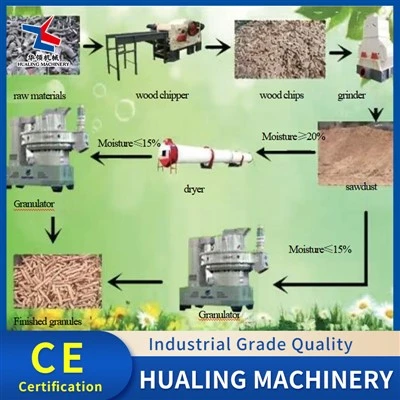
Pellet mills are even more specific, and that’s where I’ve seen the most mistakes over the years. Pellet mills work by forcing ground wood (biomass) through a die with small holes, then cutting the extruded material into pellets. The die is the heart of the mill, and it’s 100% model-specific. Take a flat-die pellet mill, Model 1000, which is common for small to mid-sized producers making animal feed pellets: its die has 6mm holes, a 12mm depth, and is made of tool steel. A ring-die pellet mill, Model 2500, built for large-scale biomass fuel production, uses a ring die with 8mm holes, a 20mm depth, and is often coated with carbide to resist wear. If you put a 1000 die on a 2500 mill, the die will crack under the pressure of forcing high-volume throughput through smaller holes. Even if the hole size is the same, the die’s inner diameter, the way it mounts to the mill’s rollers, and its thickness are all calibrated for the specific model’s power output.
Rollers are another prime example. Pellet mill rollers press the wood against the die, and their size, shape, and spacing vary by model. A Model 1500 flat-die mill has two rollers that measure 180mm in diameter, while a Model 1800 (a newer iteration of the same line) has rollers that are 190mm, a half-inch wider. If you swap the 180mm rollers into the 1800, the gap between rollers and die is too small, leading to uneven pellet density, high power usage, and even overheating that can burn the wood material. I once had a client who bought a set of generic rollers for their 1800 mill; they ended up scrapping 20 tons of pellets before they realized the rollers were the wrong size, losing more than $2,000 in raw material and production time.
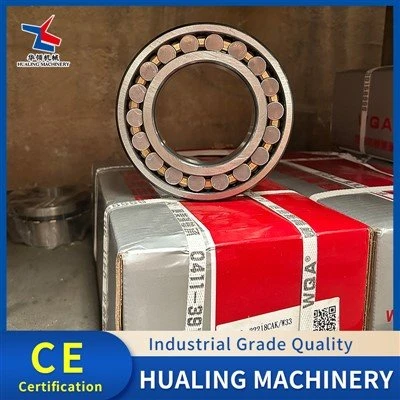
But here’s the thing: it’s not that you can never cross parts between models. It’s that you can’t guess — you have to match the specs exactly. I recently had a client with a Model 700 disk chipper and a client with a Model 700 drum chipper, both from the same manufacturer, and some of their parts are interchangeable. The feed auger bearings, for example, have the same outer diameter, inner diameter, and load rating, so they work for both. But the chipper knives? Different. The drum chipper’s knives are curved to match the drum’s radius, while the disk chipper’s are flat to fit the disk’s surface. Even for parts that look identical at first glance, checking the model’s OEM (original equipment manufacturer) manual is non-negotiable.
I know what some of you are thinking: “It’s just a bearing, right? How much can it matter?” Let me tell you about a client in Iowa who replaced the bearings on their pellet mill with generic bearings from a local auto parts store. They saved $80 on the parts, but the generic bearings didn’t have the same precision as the OEM bearings. Within two weeks, the mill’s main shaft vibrated so bad it damaged the die and two rollers. The repair cost them $12,000, and they lost three weeks of production. That $80 “savings” ended up costing them more than their monthly revenue.
Part of my job as a supplier isn’t just to sell parts — it’s to help my customers avoid those mistakes. Whenever a client calls me, the first thing I ask is not “what part do you need?” but “what model is your chipper or mill, and what serial number is on the equipment?” Serial numbers are the key here, because even two models of the same number from the same manufacturer can have part changes mid-production run. A pellet mill made in 2018 might have a slightly different die mounting system than the same model made in 2020, because the manufacturer updated the design to improve throughput. If you only go by model number, you might get the wrong part.
That’s why I keep a digital catalog that links every part to its exact model and serial number, cross-referenced with OEM specs. If a client tells me their chipper is a Model 668, serial number 12345, I can pull up exactly the shear bolt, knife, and bearing that came with that unit, right down to the grade of steel and the precision tolerance. I also make a point of checking in with clients after they install parts — a quick call a week later to make sure everything’s running smooth, and to answer any questions about maintenance, has saved more than one customer from a preventable breakdown.
Now, let’s talk about the gray area, because there is one. For smaller, older models that manufacturers no longer support, there are third-party parts that are engineered to match OEM specs — but you still have to verify. For example, a client with a 25-year-old chipper that the original manufacturer stopped making in 2005 might not be able to find OEM knives, but a reputable third-party supplier can forge knives to the exact hardness, size, and angle of the original, so they work just as well. The difference here is that these aren’t generic parts — they’re custom-fabricated to match the model’s original design. The mistake I see here is suppliers calling any off-the-shelf part “model-specific” when it’s just a generic part that’s close.
Another common gray area is in universal parts, like belts or hoses. A lot of chipper and pellet mill belts are standard V-belts, so you might think you can just buy a belt of the same length. But even here, the load rating matters. A heavy-duty drum chipper needs a belt with a higher tensile strength than a small disk chipper, even if the length is the same. Using a belt with too low a load rating will snap mid-operation, while a belt that’s too strong will put unnecessary stress on the motor. It’s not just about size — it’s about performance.
Over the years, I’ve learned that the biggest waste in the wood processing industry isn’t wasted wood or wasted labor — it’s wasted money on the wrong spare parts. I’ve seen clients buy parts that don’t fit, that wear out too fast, or that cause more damage than they fix, all because they thought “a part is a part.” That’s why I always tell new customers: when you need a spare part, don’t just grab the first one that looks right. Take five minutes to write down your model number, serial number, and what the part is doing, and reach out to someone who knows these machines inside and out.
If you’re tired of dealing with parts that don’t fit, or spending money on repairs that could have been avoided, I’m here to help. I’ve spent 12 years building a catalog of model-specific parts, backed by real-world experience with chipper and pellet mill operations across North America. Whether you need a set of knives for your old drum chipper, a die for your large-scale pellet mill, or just someone to walk you through what parts you actually need for your next routine maintenance, I can connect you to the right solution. No generic parts, no guesswork, no unnecessary downtime — just parts that work for your specific machine.
Before I wrap this up, I want to point to a few industry resources that back up what I’ve seen. A 2021 study from the Forest Products Society found that 68% of unplanned downtime in wood processing equipment is caused by improper spare part selection, with model mismatch being the single largest contributing factor. Another report from the Pellet Fuels Institute noted that using non-OEM parts not designed for a specific pellet mill can reduce die lifespan by up to 40%, and increase energy usage by 15%. These aren’t my opinions — they’re data from people who spend every day working with these machines.
Wood Hammer Mill At the end of the day, wood chippers and pellet mills aren’t one-size-fits-all machines, so why should their spare parts be? The next time you need a replacement part, take the time to confirm it’s matched to your model and serial number. It might feel like a small step, but it can save you thousands in repairs, days of lost production, and a whole lot of stress when your machine is running. If you’re ready to stop guessing and start getting the right parts for your equipment, reach out and we can work through your needs together.
Shandong Hualing Machine Manufacturing Co., Ltd.
As one of the most professional wood chipper and pellet mill spare part manufacturers and suppliers in China, we also support customized service with low price. Please rest assured to buy discount wood chipper and pellet mill spare part in stock here from our factory. If you have any enquiry about quotation, please feel free to email us.
Address: Industrial Park, Dagong Village, Changshan Town, Zouping City, Shandong Province
E-mail: hualing@sdhualing.com
WebSite: https://www.hualingmachine.com/
