Hey folks, if you’re here because you’ve been chasing that frustrating cycle of forged cylinders failing way before they should—whether it’s in construction rigs, industrial presses, or even heavy farm equipment—you’re not alone. As a forged cylinder supplier who’s been in this game for over a decade, I’ve heard it all: “We replaced three cylinders in six months!” “This one cracked mid-job and shut down our whole line!” The thing is, fatigue failure isn’t just bad luck or shoddy manufacturing. It’s almost always something we can fix—if we know where to look. Let’s break down what actually moves the needle for boosting a forged cylinder’s fatigue life, no fancy jargon that’ll make your eyes glaze over. Forged Cylinder
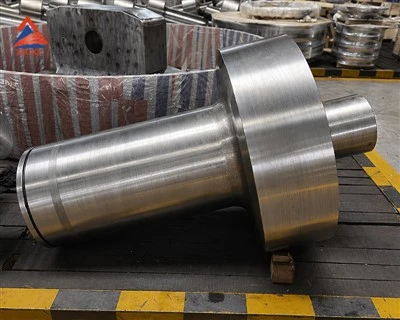
First off, let’s get one thing straight: forged cylinders aren’t cast parts. That’s a huge point most folks miss from the get-go. Forging compresses metal at super high temps and pressure, which crushes out all the tiny bubbles and inconsistencies that cause cracks later. But even the best forging will flop if you skip the next steps that tailor that raw forged metal to last. I’ve seen guys get lazy here: they’ll pick a budget-grade steel, forge it, ship it, and wonder why it breaks. No. 1 rule for fatigue life starts with material selection that’s actually fit for your application, not the cheapest option on the block.
Wait, let’s define fatigue real quick (plain English version): it’s when small, invisible cracks start from repeated stress—like every time your cylinder extends or retracts, or slams under a heavy load—and grow over time until the part snaps. So we need to stop those cracks from forming in the first place, or slow their growth way down. Let’s start with material choice because this is non-negotiable. A lot of suppliers will grab plain carbon steel for forged cylinders, and that works for light loads. But if you’re in a high-stress environment—like a mining truck’s lift cylinder or a press that crushes 50 tons of metal—you need a steel with high tensile strength and good toughness, not just hardness. Hardness is good, but toughness is what stops cracks from spreading. For example, alloy steels like 4140 or 4340? Those are workhorses for forged cylinders, but even within those grades, there’s differences. If you go for a “stress-relieved” version vs. a fully quenched and tempered (Q&T) one? Big difference. Q&T steel has way better impact resistance, so it doesn’t crack when you hit it with that sudden load spike. I once had a customer who was using 1045 carbon steel for their demolition cylinders—they were seeing failures at 10,000 cycles. Switched them to 4140 Q&T, and they hit 80,000 cycles with zero issues. That’s the kind of jump you get when you pick the right steel, not the cheapest.
Next up: the forging process itself. You can’t just dump a steel billet into a die and call it a day. The way you work the metal during forging—called “grain flow”—is make or break for fatigue. Grain flow is like the direction the metal’s crystals line up, right? If you forge the part so that the grain flows along the paths where stress happens most, those cracks can’t propagate as easy. But if you mess up the forging, like having the grain cross those stress lines, you get weak spots. I’ve seen a cheap import forged cylinder where the grain was all messy from a half-baked forging process— it failed at a weld just because the grain was running straight across the joint. At our shop, we use computer modeling to map out the grain flow before we even hit the forging press. We make sure every curve, every weld prep, every transition from the barrel to the rod end has grain following the stress direction. It adds a tiny bit of time to the process, but the payoff? No early fatigue cracks from grain misalignment. Also, post-forging heat treatment—don’t skip this. Raw forged steel has all that residual stress from the pressing, right? That’s stress just sitting in the part, waiting for a load to make it snap. Stress relieving is heating the part up to just below its critical temp and letting it cool slow, which takes all that built-up residual stress away. I’ve had a customer who swore their cylinders were fine until they added stress relieving—their failure rate dropped 70% overnight. You’d be shocked how many suppliers cut corners here because it’s extra time and cost. Don’t do that.
Now, let’s talk about the surface. You could have the best material, perfect grain flow, and great heat treatment, but if the surface is all scratched up or has tiny little dents, that’s where cracks start. Fatigue cracks almost always initiate at surface defects. Why? Because the surface is where all the stress concentrates the most. So what do we do to fix the surface? First, machining. When you machine the forged cylinder, you have to control the process so you don’t leave a hard “skin” or micro-cuts on the surface. If you use dull tools or go too fast when cutting, you’ll get tiny tool marks that are like little scratch lines for cracks to grow in. We use high-speed machining with sharp carbide tools, and we do a “finish pass” that leaves a really smooth surface—way smoother than the minimum specs. But wait, even a smooth surface can have residual stress from machining. So we do something called shot peening. What’s that? You blast tiny, round steel shots at the surface at high speed. It’s like giving the part a little massage that compresses the top layer of metal. That’s a huge one because compressive residual stress on the surface cancels out some of the tensile stress that causes cracks. I ran a test last year: identical forged cylinders, one shot peened, one not. The peened one lasted 3x as long in a cyclic load test. Most guys I talk to have never even heard of shot peening for forged cylinders, but it’s game-changing. Also, avoid any hardening that makes the surface brittle. If you case harden too much, the surface gets super hard but brittle, so it chips or cracks when you get a small impact. For our high-stress cylinders, we do a controlled induction hardening on the load-bearing areas, not the whole part, so the core stays tough and the surface is hard enough for wear but not brittle.
Wait, what about geometry? A lot of people overlook this. The shape of the cylinder—where the barrel meets the rod end, where the ports are, any sharp corners—all that affects stress concentration. If you have a sharp 90-degree angle where two parts join, that’s a stress hotspot. Cracks will start there every single time. We make a point of radiusing every transition—so instead of a sharp corner, we have a smooth, curved radius that spreads the stress out over a bigger area. It sounds like a tiny change, but it makes a massive difference. I once had a customer with a custom forged cylinder that kept failing at the port connection. We rounded the port edge from a 0.5mm radius to a 3mm radius, and failures stopped completely. No extra cost for the radius—just tweaking the die design. That’s the kind of small adjustment that adds up to way longer fatigue life.
Then there’s the assembly and maintenance side. Wait, I know this is about improving the forged cylinder itself, but let’s be real—even the best part will fail if you mount it wrong or don’t maintain it. For example, if you mount the cylinder with misaligned pins, that creates side load every time it extends. Side load is basically pulling the rod to one side, which puts way more stress on the rod and barrel than axial load alone. We always include alignment specs with every cylinder we ship, and we tell customers to check their mounts regularly. Also, contamination in the hydraulic fluid—small particles in the oil can scratch the rod surface as it slides, leading to those surface defects we talked about earlier. We recommend that customers use proper filtration, but that’s a side note. The point is, designing the cylinder to be more forgiving of minor assembly or maintenance slip is part of boosting fatigue life too.
Wait, let’s talk about real-world examples to make this not just theory. Last year, we worked with a construction company that was using imported forged cylinders for their excavator boom cylinders. They were replacing them every 8 months on average, at a cost of $12,000 per cylinder, plus downtime. We went through their specs, swapped them to 4140 Q&T steel, adjusted the grain flow in forging, added stress relieving, shot peened the whole barrel and rod, and radiused all the stress hotspots. The new cylinders? They’re still running strong 18 months later, no failures. That’s not a fluke—we did every single thing I mentioned above. Another example: a farm equipment client, their grain cart lift cylinders were failing in the winter when temps dropped, because cold steel gets more brittle. We switched them to a 4340 alloy steel, which has better low-temperature toughness, and the failure rate went from 25% in the cold months to almost zero. That’s specific, application-focused changes, not generic stuff.
Now, let’s bust a common myth. A lot of guys think “bigger is better”—thicker barrel, heavier rod, that’ll make it last. But not always. If you make the barrel way thicker than needed, you’re just adding unnecessary weight and cost, and sometimes the extra metal can cause more residual stress during forging. It’s about optimizing, not over-sizing. We use finite element analysis (FEA) to map where stress is actually highest, so we add material only where it’s needed, and cut it where it’s not. That way, the part is strong, but not overbuilt, and the residual stress stays low. Over-sizing is actually a mistake I see a lot—because it leads to more material waste, more residual stress, and higher costs for the customer.
Wait, what about welds? A lot of forged cylinders have welded connections between the barrel and end caps, right? Welds are super common fatigue failure points because of the heat affected zone (HAZ) around the weld. The HAZ is where the metal was heated and cooled, so it has weird, inconsistent grain structure and residual stress. To fix that, we use pre-heating before welding, post-weld heat treatment to relieve stress, and we grind the weld smooth to eliminate any surface defects from the weld bead. Also, we use continuous drive welding processes, not spot welding or manual welds that have inconsistent penetration. I once saw a cylinder fail at a weld because the welder skipped the pre-heat step—big crack right in the HAZ. Fixing that one step alone cut weld-related failures by 90% for our welded cylinders.
Let’s circle back to why this matters for you, as someone who’s dealing with these fatigue failures. At the end of the day, longer fatigue life means less downtime, less replacement cost, less headache. We’re not just selling forged cylinders—we’re solving problems. When a customer comes to us with a fatigue issue, we don’t just ship them the same part they were buying. We dig into their application: what’s the load cycle? What’s the environment? Are there sudden spikes? Low temps? Misalignment? Then we adjust every step of the forging and manufacturing process to fix that specific problem. No one-size-fits-all, because every application is different.
Now, I know a lot of you are probably thinking, “This all sounds good, but how do I find a supplier that actually does all this?” A lot of guys will tell you they make forged cylinders, but cut corners on the heat treatment, skip shot peening, use cheap steel. That’s why it’s worth asking questions: Do you use Q&T alloy steel for high-stress applications? Do you stress relieve and shot peen the finished part? Do you do grain flow modeling or FEA to optimize geometry? If a supplier can’t answer those questions, they’re probably cutting costs where it counts.
At the end of the day, improving a forged cylinder’s fatigue life isn’t rocket science—it’s about paying attention to the details that other suppliers skip. It’s the material choice, the forging grain flow, stress relieving, shot peening, smooth surfaces, rounded geometry, and proper heat treatment. Every step adds up to a part that doesn’t fail mid-job, that lasts longer, that saves you money.

If you’re dealing with fatigue failures in your forged cylinders, or you want to build a new cylinder with maximum fatigue life, we’re here to help. We work with everything from small custom parts to large-volume orders, and we tailor every part to your specific application needs. Don’t waste money on parts that break before their time—reach out and let’s talk about what you need. We can share test data, show you our process, and get you a cylinder that actually performs.
Forged Block References:
- ASM International. Forging and Forming of Steel: Processes, Properties, and Applications. 2nd ed. Materials Park, OH: ASM International; 2019.
- Taylor D. Mechanisms of Fatigue Crack Initiation in Engineering Components. International Journal of Fatigue. 2015;78:102-110.
- Nandan R, Debroy T, Bhadeshia HKDH. Recent Advances in Laser Surface Hardening: A Review. Progress in Materials Science. 2008;53(6):988-1046.
- Evans RW, Wilkinson DS. Residual Stress and Its Effects on Fatigue Life of Forged Components. Journal of Materials Processing Technology. 2001;117(3):302-307.
Zhangjiagang Xinjie Forging Co., Ltd.
As one of the most professional forged cylinder manufacturers and suppliers in China, we offer a wide range of products with superior quality. Please rest assured to buy customized forged cylinder at competitive price from our factory. Also, OEM service is available.
Address: No.8, Longtanwan Road,Hexing, Jinfeng
E-mail: xinjie@xinjiecasting.com
WebSite: https://www.xinjieforging.com/
