If you’ve ever walked past a store with a security camera perched above the entrance, or glanced at a keypad by an office break room door, you’ve probably never stopped to think about the thin wires running behind the walls that make that stuff work. As someone who’s been in the specialty cables game for over a decade—working with installers, system integrators, and even a few DIY folks who bit off more than they could chew when setting up a home security system—I can tell you regular old electrical wire? That’s not going to cut it for most security setups. See, security systems aren’t just about sending power from a plug to a camera or a sensor. They’re about reliable, interference-free signals, extreme durability, and sometimes even extra features that regular cable just can’t pull off. Let’s break down the specialty cables I work with every day, the ones that keep security systems from glitching when you need them most. Specialty Cables
First up, the workhorse of almost every security system: coaxial cable, specifically the kind made for CCTV (closed-circuit television) use. You might know coaxial from cable TV lines, but the stuff we use for security is a little different. Regular TV coax is designed for long, high-bandwidth runs for hundreds of channels, but security coax—often called RG-59 or RG-6, though RG-6 is more popular now for newer systems—is built for shorter, tighter runs, and it shields way better. Here’s why that matters: if a security camera is sending a feed to a DVR, any interference from nearby power lines, fluorescent lights, or even cell phones can make that feed grainy or cut out. The copper core in security coax is wrapped in a braided copper shield and a dielectric insulator, so that signal stays locked in. I once had an installer come to me after a job where he ran regular coax for a bank’s cameras—said every time a delivery truck pulled up outside, the camera feed on that side would freeze. Switched him to the right coax, and problem gone. The other big plus with security coax? It’s cheap, easy to terminate with basic tools, and works with almost every analog CCTV system out there. Even if you’re upgrading to IP (internet protocol) cameras, a lot of people still use existing coax and run baluns (those little adapters that turn coax into Ethernet) to save time on pulling new wire.
Next, if your system has sensors—door contacts, motion detectors, glass break sensors—you’re almost definitely dealing with shielded twisted pair (STP) cable. Wait, why twisted pair? Let’s do a quick science breakdown: each pair of wires is twisted around each other, and the number of twists per foot is different for each pair. That cancels out electromagnetic interference (EMI) and radio frequency interference (RFI) from things like HVAC systems, elevator motors, or even the same power lines I mentioned earlier. Regular twisted pair (unshielded, or UTP) works great for home Wi-Fi, but security sensors are often placed near noisy equipment, so STP adds that extra metal foil or braided shield around the pairs. The most common one here is Cat 5e or Cat 6 STP, right? But I’ve also seen a lot of security installers use 22-gauge twisted pair for hardwired sensors—thicker wire means less voltage drop over long runs, which means the sensor doesn’t act up if it’s 100 feet away from the control panel. A common mistake I see first-time buyers make is grabbing UTP because it’s cheaper, then ending up with false alarms when a nearby microwave makes a motion detector trigger. Don’t do that. For any hardwired sensor system, spring for STP.
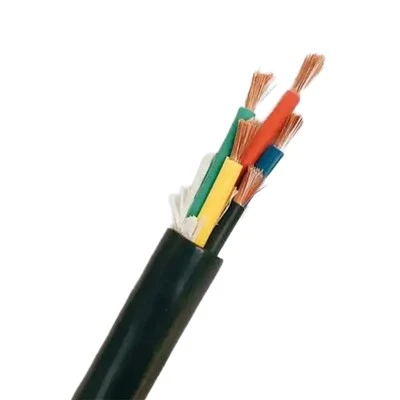
Then there’s the cable that’s made specifically for power-hungry devices in security systems—you know, things like PTZ (pan-tilt-zoom) cameras that can move, or access control readers that need to unlock a heavy door. That’s low-voltage power cable, specifically multi-conductor stranded cable. Wait, not regular house wire—stranded is better here because it’s more flexible, so if you’re running it through walls or around corners, it won’t snap like solid core. Most security low-voltage cable is 18-gauge or 20-gauge, with two, three, or four conductors. Why multiple? Because sometimes you’re running power to the camera and also a signal line, but no—wait, for PTZ cameras, you might need two conductors for power, two for control (to pan, tilt, zoom), so four total. The big thing here is voltage drop. If you run a 18-gauge wire 150 feet to a camera, the voltage will drop enough that the camera might not turn on, or might flicker. Thicker 16-gauge is for runs over 100 feet, that’s a rule I drill into every installer I work with. I once had a guy try to run 20-gauge power to a PTZ camera 120 feet from the control panel—camera turned on, but the pan/tilt was so slow it was useless. Switched to 16-gauge, and it worked perfect. Also, a lot of these low-voltage cables are plenum-rated, meaning they’re made to be run in air handling spaces (like the plenum above a dropped ceiling) because they produce less toxic smoke if they burn—super important for commercial buildings where fire code is non-negotiable.
Wait, what about systems that use fiber optic cable? Yeah, that’s the specialty cable for when you need to send video or signals over really long distances—like a campus security system, or a large warehouse where cameras are a half-mile from the DVR. Fiber is way better than copper for this because it doesn’t have any EMI or RFI issues at all—light doesn’t care about nearby power lines. And you can send way more data over fiber than copper, so if you’re upgrading to 4K or 8K camera feeds, fiber is the way to go. The two main types for security are single-mode and multi-mode. Multi-mode is for shorter runs (up to 2,000 feet, usually) and cheaper, so it’s perfect for most mid-sized commercial setups. Single-mode is for longer runs, like 10 miles or more, and it’s a bit pricier, but worth it if you’re dealing with a big property. The downside of fiber? It’s more expensive to terminate—you need special tools and training, so it’s not the best for small jobs. But for any security system over a few thousand square feet, or one that needs to connect different buildings on a property, fiber is a must. I’ve worked on a college campus where they used regular coax for their camera system, and the feed would glitch every time a football stadium’s lights turned on. Switched to multi-mode fiber, and that problem was gone instantly.
Oh, and let’s not forget about the stuff that goes outside—direct-burial cable. If you have an outdoor security camera, or a sensor buried in the ground for perimeter security, regular cable will rot, get chewed by rodents, or break if the ground shifts. Direct-burial cable is built with a tough polyethylene jacket, no PVC (which breaks down in sunlight and dirt), and sometimes a steel core to keep rodents away. A lot of people use regular low-voltage wire for outdoor cameras, and then wonder why it stops working after a year. That’s because PVC jacket breaks down, and water gets into the wires. Direct-burial cable is sealed tight, so water can’t get in. I also stock direct-burial coaxial for outdoor cameras, because it’s way more durable than regular coax. Last year, a residential customer came to me saying his backyard camera had died after two years—he’d run regular coax. Switched him to direct-burial, and he hasn’t had a problem since.
Wait, is there any other specialty cable I’m missing? Oh, hybrid cable! That’s a big one for modern IP cameras, because a lot of people need to send power, data, and video all in one cable. Instead of running separate power cable, Ethernet (for data), and coax (for video), hybrid cable has all those conductors in one jacket. It’s perfect for installations where pulling multiple wires is a hassle, like retrofitting an old building. Hybrid cable usually has four pairs of Ethernet for data, two power conductors, and sometimes a coaxial core for backup video. I’ve seen it save installers hours of time on jobs, because they only have to pull one wire instead of three or four.
Now, let’s talk about the mistakes I see people make all the time when picking these cables. First, size matters—too thin a gauge, and voltage drop kills your signal or power. Too thick, and you’re wasting money. For most residential security systems, 18 or 20-gauge multi-conductor is fine, but commercial? You need 16 or 14-gauge for runs over 100 feet. Second, environment matters—don’t run indoor cable outdoors, and don’t run regular cable in a plenum space. Fire codes will flag you, and your cable will die in months. Third, don’t skimp on shielded cable for sensors. UTP might work for a small home, but if you have multiple sensors near a Wi-Fi router or a furnace, you’ll get false alarms. I’ve had a customer with a home security system where his motion detector went off every time his wife turned on the vacuum—switched to STP, and that stopped immediately.
Here’s the thing: as a specialty cable supplier, I don’t just sell wire. I work with installers and system owners to figure out exactly what they need, not just what’s cheapest. A lot of places online will sell you “security cable” that’s just regular cable with a fancy name, but that’s not what you want. For example, RG-59 coax is cheaper than RG-6, but RG-6 has a better shield and handles higher resolution feeds, so if you’re running 1080p or 4K cameras, RG-6 is worth the extra buck.
If you’re setting up a new security system, or upgrading an old one, and you’re not sure which cable you need—whether it’s for cameras, sensors, outdoor use, or long runs—don’t guess. Working with the right specialty cable makes a huge difference. I’ve seen systems that were installed with the wrong cable glitch every day, and others that ran flawlessly for five years with the right stuff. If you’re tired of false alarms, grainy camera feeds, or outdoor cameras that die after a year, reach out to us. We’ll help you pick the right cable for your setup, no jargon, no up-selling you stuff you don’t need.
Let me wrap this up: security systems only work if every part works, and the cables are the backbone. Regular electrical wire is for lamps and outlets, specialty cables are for keeping your cameras, sensors, and access controls reliable, no matter the environment or the distance. Don’t cut corners on cable—it’s way cheaper to get the right stuff first than to fix glitches or replace dead cable a year later. If you’re in the market for specialty cables for your security system, connect with us to go over your needs.
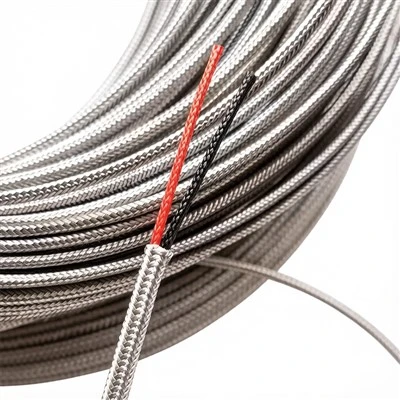
High-temperature Cables References:
- National Fire Protection Association. (2022). NFPA 70: National Electrical Code.
- International Society of Automation. (2021). Security System Wiring Best Practices Guide.
- Fiber Broadband Association. (2020). Fiber Optic Applications for Security and Surveillance Systems.
- CCTV Camera Pros. (2023). Coaxial Cable vs. Ethernet for CCTV Systems.
- Underwriters Laboratories. (2022). Standard for Safety for Communication Cables.
Anhui Yuantong Cable Co., Ltd.
As one of the most professional specialty cables manufacturers and suppliers in China, we offer a wide range of cables with superior quality. Please feel free to wholesale bulk customized specialty cables from our factory. Also, pricelist is available.
Address: Yongfeng Industrial Park, Tianchang City, Anhui Province
E-mail: ahytcable@126.com
WebSite: https://www.yuantongcable.net/
