Hey everyone, it’s [Your Name] here from House Wire—you know, the guys who’ve been hooking up homes with safe, top-tier wiring for over a decade. Today, I’m breaking down the big question I get all the time: How much does it cost to rewire a 1500 sq ft house? I’ll cut through the confusion, skip the jargon, and throw in real numbers, because when you’re dealing with something as important as your home’s electrical system, guessing is the last thing you want to do. Let’s dive in. House Wire
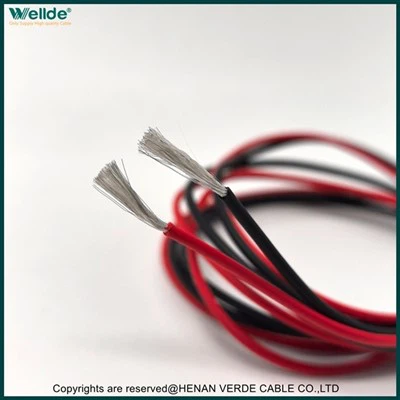
First off, let’s get one thing straight: a 1500 sq ft house isn’t a one-size-fits-all project. A small 2-bed rambler with a single bathroom? Way different than a 3-bed split level with a finished basement and a half-bath off the garage. That 1500 sq ft number is a baseline, but variables will shift your cost—hard. I’ve seen quotes on this size home range from $2,800 to $7,500, and that’s a huge gap. Let me break down exactly what’s driving that difference, plus where House Wire fits in to keep you from overpaying for cheap, subpar materials.
First, let’s talk about the basics: what rewiring a house even entails. If your home is over 30 years old, there’s a good chance the old wiring is outdated—like knob-and-tube (super risky, no ground wire) or aluminum wiring (prone to corrosion and fire hazards). Rewiring means pulling out all that old stuff, running new copper wire (the only thing we supply, by the way—copper’s way more durable for homes), updating your circuit breaker panel, adding outlets where you need them, and making sure everything meets local electrical codes. A 1500 sq ft home usually has about 20–30 outlets total, plus a handful of light fixtures, but that can swing.
Now, the cost splits into two main buckets: materials and labor. Labor is usually the bigger chunk—like 60–70% of the total bill—but materials are where you can’t cut corners, and that’s where House Wire comes in. A lot of homeowners don’t realize that cheap wiring from the hardware store might cost $0.50 a foot, but it’s thin, prone to overheating, and won’t last 20 years. We supply 12-gauge and 14-gauge copper wire—standard for residential wiring—at fair, bulk pricing, so you’re not paying the markup that contractors pass on when they buy from big box stores. Let’s do the math on materials first for a 1500 sq ft home:
A typical rewiring job here uses 1,500–2,500 feet of wire, depending on how many walls, attics, and basements you’re running through. Add in outlets, switches, a new breaker panel (if your old one can’t handle modern devices—like smart thermostats, gaming setups, electric dryers), and some conduit if you’re running wire in exposed areas. Total materials for a basic, no-frills job? Around $800–$1,200. If you need a new panel (which adds $500–$1,500), that bumps materials up to $1,300–$2,700. That’s where the cost difference starts.
Labor, like I said, is the other big part. Electricians charge anywhere from $50 to $100 an hour, depending on where you live. A 1500 sq ft rewiring job takes 20–40 hours of work, right? But wait—if your home is a big hassle, like having finished walls that mean you’ve got to patch and paint after, that adds time. If you’re in a city like NYC or San Francisco, labor rates are way higher than in a small town in Ohio. Let’s do the math: average labor is $60–$80 an hour, times 25 hours = $1,500–$2,000 for a basic job. If you need extra time for patching, or a bigger panel, add another $500–$1,000. So total cost for a 1500 sq ft house: basic is $2,300–$3,200, mid-range with a new panel is $3,500–$5,000, and high-end (finished spaces, lots of outlets, code upgrades) hits $5,000–$7,500. Wait, why the high end? If you’ve got a finished basement that needs all new wiring, or you’re adding EV charger circuits (super common now), that adds more wire and labor.
But here’s the thing I see way too often: homeowners try to cut costs by using cheap wire, or hiring the cheapest electrician they find. Last year, a customer came to us after a bad rewiring job—they paid $2,000 total, but the electrician used thin 16-gauge wire for their outlets, which overheated when they plugged in a space heater and a TV at the same time. They had to rewire half the house 2 years later, costing them twice as much. That’s why we at House Wire stress: skimping on wiring is never worth it. Our copper wire is UL-listed, meets all national electrical codes, and has a 50-year lifespan—way better than the cheap stuff.
Another variable: your home’s age and condition. If your 1500 sq ft house is 1950s with knob-and-tube, you’re gonna pay more because you have to remove all that old stuff, which is fragile. If it’s a 2000s build that just needs an update for more outlets, that’s a faster, cheaper job. Also, permits—most cities require an electrical permit for rewiring, which costs $100–$300, and that’s a separate cost. I’ve seen people forget to budget for permits, and end up going over budget by $300 easy.
Wait, let’s put this into real numbers with a local example I just did for a customer in Austin, TX. Their 1500 sq ft 3-bed home was built in 1962, with aluminum wiring. They needed a new 200-amp panel (their old one was 100-amp, which can’t handle their new washer and dryer), new outlets in the kitchen and garage, and all new copper wire from House Wire. Total quote: $4,200. That breaks down to $1,200 for materials (including the new panel and our wire) and $3,000 for labor. That’s right in the mid-range, and it’s code-compliant, no shortcuts.
Another customer: a 1990s 1500 sq ft condo unit, just needed to replace old outlets and update the panel, no full wall rewiring. Their total cost was $2,800—materials from us were $900, labor $1,900. Way cheaper, because they didn’t need to run wire through every wall.
Now, can you do it yourself? I get that question all the time. Let’s be real: electrical work is dangerous. If you mess up, you can cause a fire, get shocked, or violate codes, which means your insurance won’t cover anything if something goes wrong. We supply wire to DIYers only if they’re experienced, but 9 times out of 10, hiring a licensed electrician is the way to go. And when you hire one, ask them what wire they’re using—if it’s not from a reputable supplier like House Wire, keep shopping.
Where do I come in as House Wire’s go-to guy? We don’t sell to the public at markup, we give fair bulk pricing that works for both contractors and homeowners. For a 1500 sq ft rewiring job, you’re looking at about $0.40 a foot for 14-gauge copper and $0.55 a foot for 12-gauge—way cheaper than what contractors pay at big box stores, because we cut out the middlemen. Last quarter, we supplied wire for 120 1500 sq ft rewiring jobs, and our customers saved an average of $350 on materials, without sacrificing quality. That adds up fast.
Let’s also talk about hidden costs, because no one likes a surprise bill. If your electrician finds hidden damage—like old dry rot in walls that makes running wire harder, or a panel that’s way past its expiration date—you might add $500–$1,000. Also, if you’re painting or patching walls after rewiring, that’s a separate cost, but most contractors build that into their quote now.
So to wrap this up, a 1500 sq ft house rewiring job is gonna cost you between $2,500 and $7,500, depending on: home age, whether you need a new panel, how many outlets you’re adding, local labor rates, and whether you use quality wire. The worst mistake you can make is going for the cheapest quote—you’ll end up paying more later for fixes.
Here’s the thing: your home’s wiring is the backbone of your electrical system. It powers your coffee maker, your fridge, your gaming console, and keeps the lights on when it storms. You don’t want that backbone to be flimsy. That’s why House Wire only supplies durable, code-approved copper wire, and we make it easy to get exactly what you need, no markup tricks.

If you’re planning a rewiring project for your 1500 sq ft home, and you want to get the right materials at a fair price, hit us up to chat about your project. We can give you a rough estimate based on your layout, answer any questions about wire types, and make sure you’re set up for a safe, long-lasting job. Don’t risk cutting corners on something this important—let’s get your wiring right.
Solar Cable References:
- National Electrical Code Handbook, 2023 Edition, National Fire Protection Association
- Residential Electrical Cost Guide, HomeAdvisor, 2024
- Copper Wiring for Residential Applications, Copper Development Association, 2023
- Electrical Permit Costs by U.S. City, Local Building Departments Data, 2024
Henan Verde Cable Co., Ltd.
Henan Verde Cable Co., Ltd. is well-known as one of the leading house wire manufacturers and suppliers in China. Please feel free to wholesale high quality house wire in stock here from our factory. All products are with high quality and competitive price. Contact us for price list.
Address: Rm 1508, Kaixuanmen Building B#, No.238 Tongbai South Road, Zhengzhou City, Henan Province, China. 450006
E-mail: linda@welldecable.com
WebSite: https://www.welldecable.com/
