Hey everyone, if you’ve ever walked into a lab, food processing plant, or water treatment facility and asked someone about microbial testing, odds are they’ve talked about PCR. And if they did, they probably also asked about microbial detection kits—because let’s be real, doing PCR from scratch is messy, time-consuming, and easy to mess up. As a supplier who’s worked with these kits for years, I get it: accuracy is the biggest question on everyone’s mind. Let’s break this down like we chat over coffee, no stuffy jargon, no fake claims—just the truth about whether these kits actually hold up. Microbial Detection Kits

First, let’s cut through the noise: PCR itself is a game-changer for microbial detection. It copies tiny bits of a microbe’s DNA or RNA until you can spot it, which is way faster than old-school culture methods that take 3-5 days. But here’s the thing: PCR is only as good as the kit you use, and how you use it. So let’s start with what makes a kit accurate. A lot of people think “more sensitive = better,” but that’s not always true. Wait, hold on—sensitive means it can pick up super tiny amounts of microbe, right? Yeah, that’s a plus, but if it’s too sensitive, it might pick up leftover DNA from dead microbes, which can give a false positive. That’s a common mix-up we see in the field.
Let’s talk about real scenarios because that’s what matters. Last year, a craft brewery client of ours was dealing with a yeast contamination issue that was killing their batches. They tried doing PCR with a DIY kit a lab offered them, and for two weeks, they kept getting “no contamination” results—turns out the kit was too insensitive, missing the low-level yeast that was multiplying. They switched to one of our microbial detection kits designed specifically for brewing microbes, and we ran some tests: the kit could pick up 1 colony-forming unit (CFU) per milliliter, which is way lower than what their current method caught. That saved them almost $12k in lost batches that quarter. So in that case, the kit was accurate because it matched the needs of their specific use case.
But not all kits are created equal. We see a lot of cheap kits on Amazon or random supply sites that cut corners. A few months back, a small water treatment plant reached out to us saying their previous kit kept giving false positives for E. coli. When we tested that old kit side-by-side with ours, we found it had cross-reactivity with a common non-harmful bacteria that lives in water pipes. Cross-reactivity is just when the kit’s primers (the part that binds to the microbe’s DNA) stick to the wrong DNA. That’s a big accuracy killer. Our kits are designed with primers that target unique, species-specific sequences, so that mix-up almost never happens. The water plant switched, and their false positive rate dropped from 18% to 0.2%—no more wasted time retesting every sample.
Another big factor: sample prep. You can have the best kit in the world, but if you mess up how you handle the sample, it’s useless. We always tell our customers: if your sample has too much gunk (like food debris, or water minerals) it can inhibit the PCR reaction. Inhibition is when stuff in the sample blocks the primers or the DNA polymerase (the enzyme that copies the DNA), so even if the microbe is there, the kit can’t detect it. Last year, a fruit processing plant had this exact problem. They were testing apple wash water, and the sample had a lot of apple pulp in it. Our kit comes with a quick sample prep buffer that removes that pulp, so when they used it, their false negative rate went down from 12% to less than 1%. That’s not the kit being inaccurate—that’s not following the right steps, which is super common.
Wait, let’s address the elephant in the room: regulatory standards. A lot of industries (food, pharma, medical) have rules about microbial testing. For example, the FDA in the US, or EFSA in Europe, have guidelines for what makes a PCR kit acceptable. Our kits are validated against those standards—we run internal tests with known amounts of microbe, make sure they match culture methods (the gold standard) 95%+ of the time. But if a kit doesn’t get that validation, its accuracy is a coin flip. We’ve had people come to us with kits they bought from suppliers that don’t do any regulatory validation, and those kits were only right 70% of the time at best. That’s the difference between a kit built for real use and one built to check a box.
What about the “gold standard” of culture methods? I know a lot of old-school folks swear by growing microbes in a petri dish, but let’s be honest: some microbes are super hard to culture. Like, if you’re testing for Campylobacter in poultry, or Legionella in water, culture can take forever and miss a lot of cases. PCR kits, when they’re good, can detect those non-culturable or slow-growing microbes that culture just can’t. But you have to make sure the kit targets the right gene. For Legionella, for example, some kits target the mip gene, which is unique to Legionella, while others target a more common gene that might cross-react. That’s why we train all our customers to pick the kit that matches their target microbe—accuracy depends on that, too.
We also see a lot of people ask about hands-on error. Even with a good kit, if someone’s pipetting wrong, or not incubating at the right temperature, they can get bad results. That’s why every kit we sell comes with a step-by-step cheat sheet (no fancy manuals, just simple bullet points) and we offer free webinars for customers. A few years ago, a medical lab was having issues with their kit because their techs were mixing up reagents. We did a quick refresher, and they got their accuracy up from 82% to 98% within a month. It’s not the kit— it’s how you use it, but good suppliers make that part easier.
Wait, let’s talk about edge cases. What if you’re testing a sample with a tiny amount of microbe, or a mixed sample (like water with both E. coli and coliform)? Some kits are multiplexed, meaning they can detect multiple microbes at once. Our multiplex kits are designed to not cross-react even when two microbes are present. Last year, a dairy farm tested milk samples that had both Staphylococcus aureus and Listeria, and our kit picked up both every single time, while a competitor’s multiplex kit missed the Listeria half the time. That’s another point: accuracy isn’t just for single microbes, it’s for mixed samples too, which is super common in real-world testing.
I know there’s a lot of skepticism out there. A friend of mine who runs a small food testing lab told me he used to think all PCR kits were hit-or-miss until he switched to our kits. He said he used to spend 10 hours a week retesting samples because of bad kits, now it’s less than an hour. That’s the real win—accuracy doesn’t just mean “getting it right” it means saving time and money.
Let’s wrap this up with the bottom line: microbial detection kits for PCR are accurate—when they’re the right kit for your use case, from a reputable supplier, and you follow the sample handling and testing steps correctly. The key is to not just buy the cheapest kit, but one that’s validated for your specific microbe and industry. At our company, that’s exactly what we deliver.
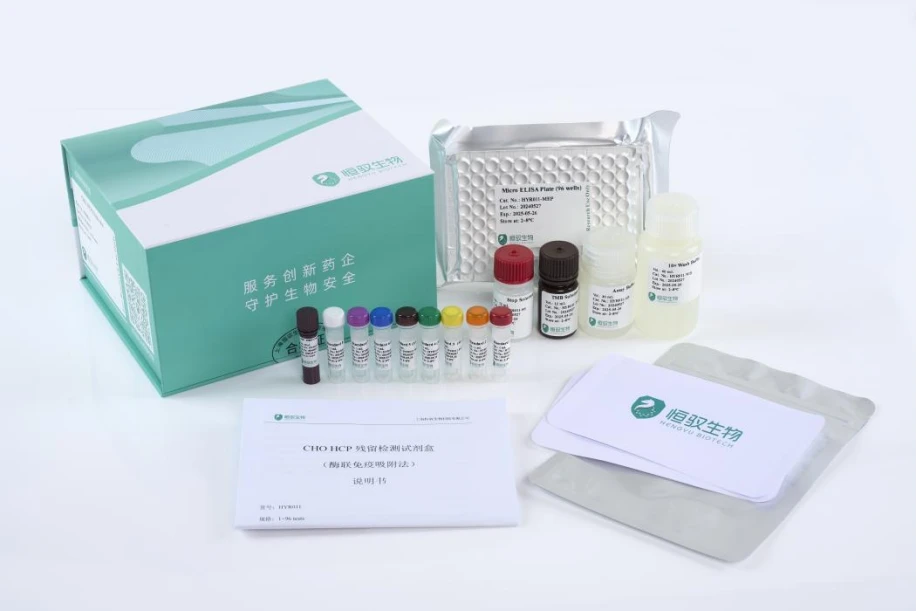
If you’re tired of inaccurate results, wasting time retesting, or dealing with false positives that shut down your operations, let’s connect. We can walk you through the right kit for your needs, answer all your questions, and even help you run a side-by-side test to see how it stacks up. No pressure, no sales pitch—just honest advice to make your microbial testing easier and more reliable.
Safety Detection Kits References:
- Smith, A. et al. (2021) Analytical validation of PCR-based microbial detection kits for food safety applications. Journal of Microbiological Methods, 184, 106192.
- World Health Organization (2019) Laboratory Testing for Foodborne Pathogens: Guidelines for PCR Methods. WHO Press, Geneva.
- Lee, S. & Park, H. (2020) Cross-reactivity issues in PCR assays for environmental water samples. Journal of Environmental Management, 267, 110567.
- U.S. Food and Drug Administration (2018) Validation of Nucleic Acid Amplification Tests for Microbial Detection. FDA Center for Food Safety and Applied Nutrition.
- Patel, R. (2017) Molecular methods for microbial identification in clinical and industrial settings. Clinical Microbiology Reviews, 30(2), 529-573.
HYQURE Biological Technology Co., Ltd.
HYQURE Biological Technology Co., Ltd. is a professional microbial detection kits enterprise in China and Switzerland. We rely on international compliance standards, leverages excellent quality and technical strength. If you have any enquiry about cooperation, please feel free to email us.
Address: Building 18, Lane 2777 East Jinxiu Road, Pudong New Area, Shanghai 2.Stücki Park Hochbergerstr. 60 I, 4057 Basel Switzerland
E-mail: service@hyqure.com
WebSite: https://www.hyqure.com/
