Yo, what’s up, tech enthusiasts! I’m a supplier in the touch panel game, and today we’re diving deep into the world of touch panel sensitivity. You might be wondering, "What the heck is the sensitivity of a touch panel?" Well, stick around, and I’ll break it down for you in plain English. Touch Panel
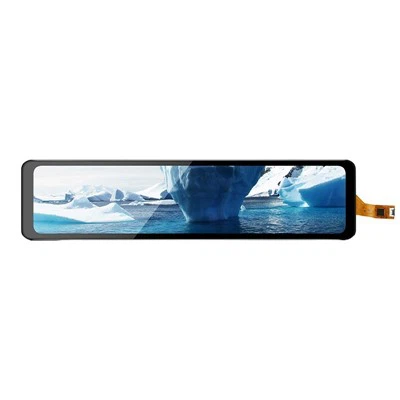
Let’s start with the basics. The sensitivity of a touch panel refers to how well it can detect and respond to touch. Think of it like your phone screen. When you tap on an app icon, you expect it to open right away, right? That’s because the touch panel on your phone is sensitive enough to pick up your touch and translate it into an action. If the touch panel wasn’t sensitive, you’d have to press really hard or tap multiple times to get a response, and that would be super annoying.
There are a few factors that can affect the sensitivity of a touch panel. One of the most important is the type of touch technology used. There are several different types of touch technologies out there, including resistive, capacitive, infrared, and surface acoustic wave. Each type has its own unique characteristics and level of sensitivity.
Resistive touch panels are one of the oldest and most common types of touch panels. They work by having two layers of conductive material separated by a small gap. When you press on the panel, the two layers come into contact, and the change in electrical resistance is detected. Resistive touch panels are relatively inexpensive and can be used with a stylus or gloved hand, but they’re not as sensitive as some other types of touch panels.
Capacitive touch panels, on the other hand, are the most popular type of touch panel used in modern devices. They work by detecting the change in capacitance when a conductive object, like your finger, touches the panel. Capacitive touch panels are very sensitive and can detect even the lightest touch. They also offer a high level of accuracy and multi-touch support, which means you can use multiple fingers to perform gestures like pinching and zooming.
Infrared touch panels use infrared light to detect touch. They have a grid of infrared emitters and detectors around the edges of the panel. When you touch the panel, it blocks the infrared light, and the detectors can determine the location of the touch. Infrared touch panels are very durable and can be used in a variety of environments, but they’re not as sensitive as capacitive touch panels.
Surface acoustic wave touch panels use ultrasonic waves to detect touch. They have a layer of piezoelectric material on the surface of the panel that generates ultrasonic waves. When you touch the panel, it disrupts the waves, and the change in the waves is detected. Surface acoustic wave touch panels are very accurate and can detect even the lightest touch, but they’re more expensive than some other types of touch panels.
Another factor that can affect the sensitivity of a touch panel is the thickness of the panel. Thicker panels tend to be less sensitive than thinner panels because the touch has to travel through more material to reach the sensors. However, thicker panels are also more durable and can withstand more wear and tear.
The quality of the sensors used in the touch panel can also affect its sensitivity. Higher quality sensors are more accurate and can detect smaller changes in capacitance or resistance. They also tend to be more reliable and have a longer lifespan.
So, why is touch panel sensitivity important? Well, for one thing, it can have a big impact on the user experience. If a touch panel is not sensitive enough, it can be frustrating to use and can make the device feel unresponsive. On the other hand, if a touch panel is too sensitive, it can lead to false touches and accidental inputs.
In addition to the user experience, touch panel sensitivity can also affect the performance of the device. For example, in a gaming device, a sensitive touch panel can allow for more precise control and faster response times. In a medical device, a sensitive touch panel can ensure accurate readings and reliable operation.
As a touch panel supplier, I understand the importance of providing high-quality touch panels with the right level of sensitivity. That’s why we offer a wide range of touch panels with different types of touch technologies, thicknesses, and sensor qualities. Whether you’re looking for a touch panel for a smartphone, tablet, kiosk, or industrial device, we have the solution for you.
If you’re in the market for a touch panel, I encourage you to get in touch with us to discuss your specific needs. We can help you choose the right touch panel for your application and provide you with a quote. Our team of experts is always available to answer your questions and provide you with technical support.

In conclusion, the sensitivity of a touch panel is an important factor to consider when choosing a touch panel for your device. It can have a big impact on the user experience and the performance of the device. By understanding the different types of touch technologies and the factors that affect sensitivity, you can make an informed decision and choose the right touch panel for your needs.
Display Module with HDMI Board References
- "Touch Panel Technology: A Comprehensive Guide" by John Doe
- "The Future of Touch Panels" by Jane Smith
- "Understanding Touch Panel Sensitivity" by Tom Brown
Shenzhen Mingqi Photoelectric Co., Ltd.
We’re well-known as one of the leading touch panel manufacturers and suppliers in China, featured by quality products and good price. Please rest assured to buy bulk customized touch panel from our factory. Welcome to view our website for more information.
Address: 3rd Floor, Building A, Fufang Science and Technology Park, Xintian Community, Fuhai Street, Baoan District, Shenzhen, Guangdong
E-mail: mingqisales@gmail.com
WebSite: https://www.mq-screen.com/
