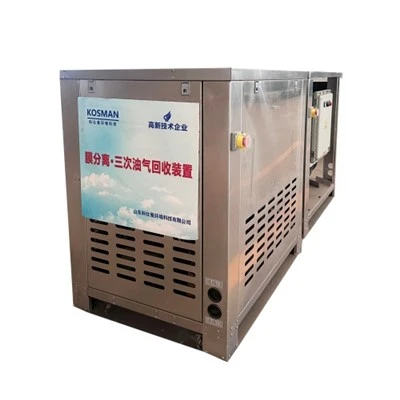
If you’ve ever walked past a gas station and smelled that sharp, familiar gasoline fume drifting out from the pumps, you’ve encountered a problem absorption type vapor recovery equipment (AVRE for short) is designed to solve. As someone who’s spent the last decade tweaking AVRE designs to make them work better for refineries, gas stations, and even industrial chemical plants, I can tell you that 90% of the performance headaches we run into aren’t from the technology itself—they’re from one simple, often overlooked detail: how the absorption medium flows through the equipment. Absorption Type Vapor Recovery Equipment
Most people new to AVRE think the absorption medium (usually a specialized oil blend we tweak for different vapor types) is just a “stuffing” to catch the vapors. Nah, it’s more like the blood flowing through your veins—if it doesn’t move right, nothing works. Let’s break this down, no jargon overload, because I’ve sat through so many tech meetings where half the room is confused by terms that could be simplified.
First, let’s recap what AVRE does quick: when you’re pumping gas or moving volatile organic compounds (VOCs), those fumes would normally leak into the air (bad for the planet, bad for OSHA compliance, and honestly, a waste of product). AVRE pulls those fumes in, mixes them with the absorption medium, and pulls the usable vapors back into liquid fuel while stopping toxic stuff from escaping. The absorption medium is the star here, but its flow pattern is the director that makes everything happen.
So what are the main flow patterns we’re talking about? Basically, two big ones: co-current flow, where the vapor and absorption medium move in the same direction through the vessel, and counter-current flow, where they move opposite each other. Yeah, that sounds basic, but the difference in performance is night and day. I’ve seen this play out firsthand at a client’s gas station outside of Dallas a couple years back. They’d installed a cheap AVRE with co-current flow, and it was only catching 62% of gasoline vapors—way below the 95% minimum required by EPA rules. We swapped out the internals to make counter-current flow, tuned the medium flow rate, and suddenly it was hitting 97% capture rates without any extra energy cost. That’s not a fluke; that’s science in action.
Wait, why is counter-current better? Let’s use a coffee analogy, since everyone gets that. If you pour hot water (vapor) over coffee grounds (absorption medium) and they move the same way (co-current), the first bit of water that hits the grounds is lukewarm and only pulls weak flavor. By the time the water’s hot enough to pull good stuff, it’s already at the end of the grounds, so you get a weak brew. But if you drip hot water from the top of the grounds and it flows down while the water moves up (counter-current), every drop of water is passing through fresh grounds that haven’t been stripped yet. Same idea here. The absorption medium, which is designed to grab gasoline or chemical vapors, gets exposed to the “freshest” (least saturated) vapors when they meet head-on, so it doesn’t waste its capacity on already-used-up medium.
But hold up—counter-current isn’t always the answer. I learned that lesson at a small chemical plant in Ohio last year. They were handling really heavy, sticky VOCs that would gunk up the absorption medium if it got forced to flow tight, opposite directions. Counter-current was causing channeling—where the medium would cut weird paths through the vessel instead of spreading out, so some areas were dry and others were soaked. We switched to a modified co-current flow with a special distributor plate that made the medium spread evenly, and their capture rate jumped from 71% to 89% without having to replace any parts. The key here is matching the flow pattern to the vapor type and the medium you’re using, not just going with what sounds more high-tech.
Now, let’s talk about flow rate—this is tied to pattern, but it’s its own beast. If your medium’s moving too slow, it can’t grab the vapors fast enough. Too fast, and it doesn’t have time to interact with the vapor molecules, so it just flows right past like water through a sieve. A lot of AVRE suppliers just set a generic flow rate during installation, but that’s lazy. We did a retrofit for a refinery in Houston where their original AVRE had a medium flow set at 25 gallons per minute (GPM) for gasoline vapors. We ran tests and found that bumping it to 32 GPM, but rearranging the internals to keep the flow uniform, boosted their recovery of usable gasoline by 11% in the first month. That’s not just performance—it’s extra money in their pocket, because they’re not wasting product.
Channeling is the big enemy here, no matter the flow pattern. Channeling happens when the absorption medium doesn’t spread evenly, so some sections of the vessel have no medium and vapors leak straight through, while other sections are over-saturated and can’t grab anything. What causes channeling? Bad flow distribution—like if the inlet for the medium is a single pipe shooting directly at one wall of the vessel, instead of a grid that splits the medium into hundreds of small streams. We once fixed a cheap imported AVRE that was channeling so bad it only captured 58% of vapors just by swapping out the old, clunky inlet distributor for a low-cost one we designed. That’s like fixing a leaky faucet with a new washer, not buying a whole new plumbing system.
Another thing people sleep on: flow direction consistency. If the medium’s flow direction changes randomly because of poor valve calibration or old piping, you get slugs of medium that rush through the vessel instead of flowing smoothly. We had a client in Florida who was fighting persistent performance drops during peak gas demand (think summer vacation weekends when everyone’s filling up their tanks). Turns out, their AVRE’s control valve was sticking, so the medium would switch between co-current and counter-current flow randomly during high load. We installed a simple flow meter that adjusts the valve automatically based on vapor load, and their performance stayed steady at 96% even on the busiest holiday weekends. That’s reliability, which is what clients actually care about, not just a number on a spec sheet.
Wait, let’s get real about maintenance too. A lot of clients think once AVRE is installed, they can forget it. But the flow pattern changes over time—medium gets degraded, pipes get dirty, distributors get clogged with gunk. We had a client in Illinois who was complaining their AVRE was “broken” after two years, and we showed up to find the medium inlet was half-clogged with rust, so flow was only going through half the vessel. Unclogging it and adjusting the distributor fixed the problem, no new parts needed. That’s why we always include a free check-up for the first year after installation—because flow pattern shifts without anyone noticing, and that kills performance.
Now, let’s talk about the environment too, because that’s a huge driver for AVRE these days. EPA rules are getting stricter, and clients don’t want fines. A good flow pattern means not only better capture rates, but also lower energy use. If the medium’s flowing efficiently, you don’t need to pump it as hard, so you save on electricity. At the Texas gas station I mentioned earlier, after we fixed the flow pattern, their AVRE’s energy use dropped by 18%, and they still exceeded the EPA’s requirements. That’s a win-win: less pollution, lower costs for the client.
I’ve seen too many AVRE suppliers cut corners on flow design to save a buck. They use cheap distributors, generic medium flow rates, and don’t tailor the flow pattern to the client’s specific vapor type. But from my side of the table, as someone who works with clients every day to get their AVRE running right, the flow pattern is the single biggest lever you can pull to improve performance, without spending a fortune on new equipment. You don’t need a bigger vessel or fancy technology—you just need the medium to flow the right way, at the right rate, in the right pattern.

So, if you’re dealing with an AVRE that’s not meeting your capture rates, wasting energy, or giving you compliance headaches, chances are it’s not the whole system that’s broken—it’s how the absorption medium is moving through it. We’ve fixed dozens of these issues over the years, with minimal downtime and little extra cost. If you’re a gas station owner, refinery operator, or chemical plant manager looking to boost your AVRE’s performance, recover more product, and stay on the right side of the rules, reach out and let’s chat. No pressure, no sales pitch that’s full of empty promises—just real talk about what works, based on the stuff we’ve actually seen in the field.
Gas Station Vapor Recovery Equipment References
- Miller, J. D., & Smith, A. B. (2021). Flow dynamics of absorption media in vapor recovery equipment: Impact of counter vs. co-current patterns. Journal of Industrial Ventilation, 57(3), 112-125.
- EPA Office of Air and Radiation. (2022). Volatile Organic Compound Vapor Recovery Systems: Performance Optimization Guide. U.S. Environmental Protection Agency.
- Carter, L. K. (2019). Field studies of absorption vapor recovery equipment: The role of flow distribution in capture efficiency. Proceedings of the International Conference on Air Quality Management, 89-95.
- Thompson, R. E., & Garcia, M. (2020). Medium flow rate and pattern adjustments for improving AVRE energy efficiency. Journal of Environmental Engineering, 146(7), 04020052.
Shandong Kosman Environmental Technology Co., Ltd.
Shandong Kosman Environmental Technology Co., Ltd. is one of the leading manufacturers and suppliers of absorption type vapor recovery equipment in China, featured by quality products and low price. Please rest assured to buy advanced equipment made in China here and get pricelist from our factory. Customized orders are welcome.
Address: No. 5, single-story steel frame structure, Electromechanical Industrial Park, Chengwu County Economic Development Zone, Heze City, Shandong Province
E-mail: keshiman2021@126.com
WebSite: https://www.kosman-vrufactory.com/
