Alright, let’s cut to the chase—if you’ve ever watched a bike chain spin a rear wheel, or felt the hum of a garage door opener kicking into gear, you’ve seen gears do their thing. I’ve been in the gear supply game for over a decade, and let me tell you, most folks think it’s just “teeth turning teeth”… but there’s way more to it than that, especially for anyone who actually needs gears that work (looking at you, small shop owners, big manufacturing ops, and everyone in between who’s tired of parts that strip out mid-job). Gear
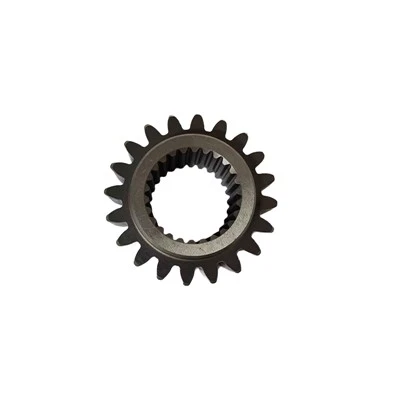
Let’s start with the basics, but keep it real—no stuffy textbook jargon. Gears transfer power by meshing their teeth together, plain and simple, but it’s how that meshing works that makes all the difference. When one gear (let’s call it the driver gear) gets turned by a motor, crank, whatever, its teeth lock into the teeth of the next gear (the driven gear). That lock doesn’t slip—unlike a loose chain or a worn belt—so all that rotational force (we call that torque) gets passed directly along. It’s like if you’re holding hands with someone and you pull forward: they move too, no gaps, no skips.
Wait, but why do we have different sizes? Oh, that’s where the magic (aka math) happens. If the driver gear is smaller than the driven gear, the driven gear spins slower… but with way more torque. Think about a truck’s transmission: low gears let big, heavy loads get moving because they’re cranking that torque up. Flip it, and a big driver gear spinning a small driven one makes things spin fast—like the gears in a drill that make the bit zip around to drill through metal in seconds. I’ve seen so many people mix this up: size = torque/speed tradeoff, no exceptions. It’s not rocket science, but it’s the backbone of almost every machine that moves parts.
Now, let’s talk about how that power actually doesn’t get wasted. You might think when teeth slam together, energy goes flying off as noise or heat—well, it does… if the gears are bad. But good gears (the ones we supply) are cut with super precise tooth profiles, usually involute curves. What’s that mean? It’s the shape of the tooth that keeps contact smooth as they mesh, not bumping into each other like two awkward people at a party. That smooth contact means less friction, less heat, less power lost before it even gets where it needs to go. I’ve had a customer come to us once saying their old gears were eating up 20% of their motor’s power—switched to our precision-cut ones, and that dropped to 3%. Small change, big savings, right?
Let’s get concrete with a example you can wrap your head around. Say you’re running a conveyor belt in a factory. You’ve got a 10-tooth motor gear spinning at 100 RPM, paired with a 40-tooth driven gear. The driven gear will spin at 25 RPM (since 10/40 = 1/4), but its torque is 4x higher. That’s exactly what you want for a heavy conveyor moving boxes all day—slow enough to not spill stuff, strong enough to haul loads without stalling. If you flipped them, 40-tooth driver, 10-tooth driven? 400 RPM, way too fast for a conveyor, but perfect for a fan that needs to spin air hard. It’s all matching the gear ratio to what you need, and that’s where most people mess up when picking their own gears—they guess instead of calculating the ratio to their exact load.
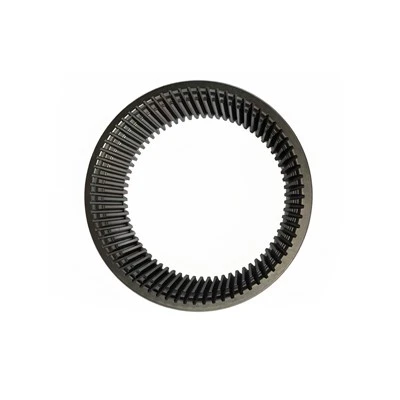
Wait, but what about different types of gears? Yeah, I can’t just talk about the basic round ones. There’s spur gears (the flat, straight-tooth ones you see on a bike gear box—simple, cheap, great for straight-line power), helical gears (their teeth are slanted, so they mesh smoother, less noise, better for heavy machinery), and even bevel gears that turn power at an angle—like the ones in a lawnmower that turn the engine’s horizontal power to the vertical blade. We stock all of these, not because we hoard parts, but because every job needs a different gear. I once had a guy from a brewery come in needing helical gears for their bottling line—spurs would’ve rattled so bad, they’d have lost a bottle cap every minute. Helicals? Quiet, smooth, no issues.
Now, let’s get real about what happens when gears fail, because that’s why people call us in a panic. If your teeth are worn down, or the profile is off, the mesh slips. Suddenly your conveyor stops, your drill bit slows to a crawl, your car’s transmission locks up (okay, that’s more than two gears, but you get the idea). We do custom gear cutting for a reason—off-the-shelf gears are fine for hobbyists, but if you’re running a 24/7 operation, you need gears cut to tolerances that don’t leave gaps. That’s where our team comes in—we’ve got guys who’ve been doing this for 20+ years, who can look at a customer’s machine and say, “You need a 32-tooth helical, not a 30-tooth spur, because your load is 1,200 lbs, not 800.”
Let’s bust a common myth too: gears don’t just transfer rotational power—they transfer directional power, too. If you have two gears spinning the same direction? No, wait—they spin opposite. If you need both gears to spin the same way, you need a third “idler” gear in between. It’s like a middleman that flips the direction back. Super simple, but so many new engineers forget that and end up with their whole machine turning backwards, which is a huge headache for assembly lines. I’ve had to rush out a replacement idler gear more times than I can count because someone skipped that step.
Another thing people don’t talk about enough: load matters. A gear that works for a small pump might snap under the torque of a construction crane. That’s why we use different materials—steel for heavy loads, nylon for light, quiet applications like door openers, even brass for things that need to resist corrosion (like food processing equipment, where metal shavings are a no-go). We don’t just sell gears—we match material to your use case, because a gear is only as good as how it handles the work it’s supposed to do.
Let’s circle back to power transfer efficiency, because that’s the name of the game. Even the best gears lose a tiny bit of power to friction, but it’s usually less than 2-3% when done right. Bad gears? Up to 15% loss, which adds up to thousands in extra electricity costs every month. I did a quick check last year: a local warehouse switched from their generic gears to ours, and their monthly power bill dropped by $1,200. That’s not pocket change—that’s a new forklift, or a bonus for the team, or whatever they needed. That’s the real payoff of getting your gears right.
Now, if you’re reading this and nodding along because you’re dealing with gears that keep failing, or you’re planning a new machine and have no clue what size/type you need? Don’t waste time guessing. We’re not here to sell you the most expensive gear—we’re here to sell you the right gear, period. We’ve supported everyone from backyard mechanics fixing a lawnmower to Fortune 500 companies scaling their assembly lines, and if you bring us your specs, we’ll hook you up with something that works, no hoops to jump through.
Look, I’ve been in this game long enough to know that gears are the unsung heroes of almost every machine. You don’t see them in a magazine ad for a new car, but without them, that car won’t move a mile. You don’t spot them in a commercial for a factory, but without them, the conveyor stops. And if you want gears that actually do what they’re supposed to—transfer power reliably, efficiently, without giving you headaches—hit us up. We’re not salespeople yelling at you to buy something—we’re gear guys, who know this stuff inside and out, and we’ll help you get exactly what you need.
Gear References:
- Shigley, J. E., Mischke, C. R., & Budynas, R. G. (2004). Standard Handbook of Machine Design (3rd ed.). McGraw-Hill.
- Townsend, D. P. (1992). Gear Noise and Vibration (2nd ed.). Marcel Dekker.
- Oberg, E., Jones, F. D., Horton, H. L., & Ryffel, H. H. (2020). Machinery’s Handbook (31st ed.). Industrial Press Inc.
- Hamrock, B. J., Schmid, S. R., & Jacobson, B. O. (2004). Fundamentals of Machine Elements (2nd ed.). McGraw-Hill.
- G. W. Tootill, “Gear Tooth Design and Power Transmission Efficiency,” Proceedings of the Institution of Mechanical Engineers, vol. 182, no. 1, 1967, pp. 1121–1136.
Yancheng Botu Transmission Machinery Co., Ltd.
As one of the most professional gear manufacturers and suppliers in China, we have world-leading production equipment and strong manufacturing capabilities. Please rest assured to wholesale cheap gear for sale here from our factory. Contact us for more details.
Address: No. 33, Yongxing Road, Economic Development Zone, Jianhu County, Yancheng City, Jiangsu Province
E-mail: 15261979878@163.com
WebSite: https://www.ycbtcdjx.com/
